Summarize with
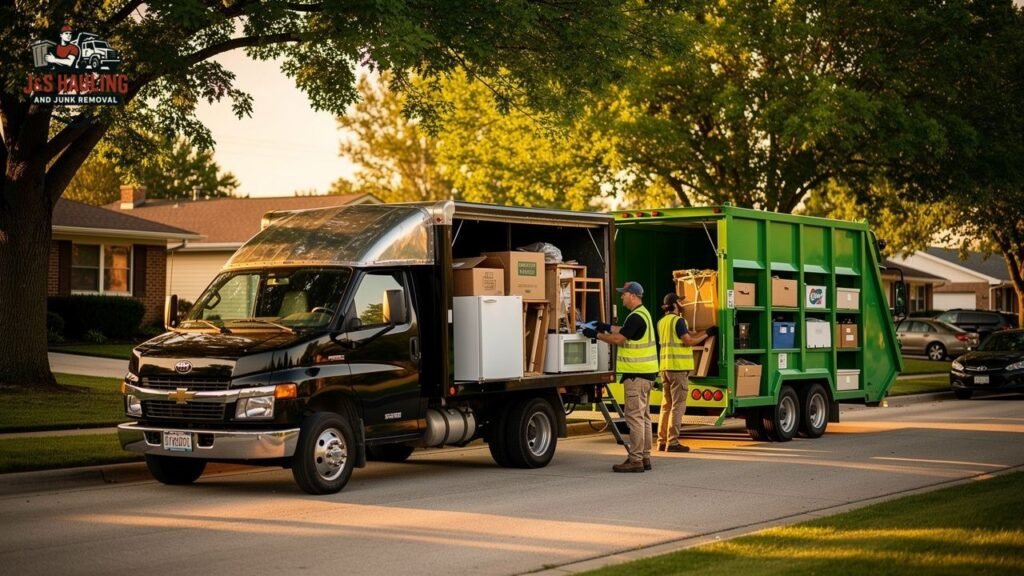
Most junk removal companies accept a wide variety of household and professional appliances, including refrigerators, stoves, washers, dryers, and water heaters. These companies typically take any item that two people can lift safely, and that does not contain hazardous materials. However, items containing certain chemicals, pressurized gases, or radioactive components are often refused due to strict environmental and safety regulations.
Understanding which items qualify for pickup helps streamline the clearing process and prevents last-minute scheduling issues. Professional hauling services focus on efficiency and safety, meaning they must follow local laws regarding toxic waste and flammable materials. J&S Hauling & Junk Removal provides this guide to help clarify common industry standards for appliance disposal and recycling.
Common Appliances Accepted for Removal
Standard household machines make up the bulk of appliance removal services. Most of these items are comprised of metal, plastic, and electronic components that are easy to process at local transfer stations or recycling centers.
Kitchen Appliances
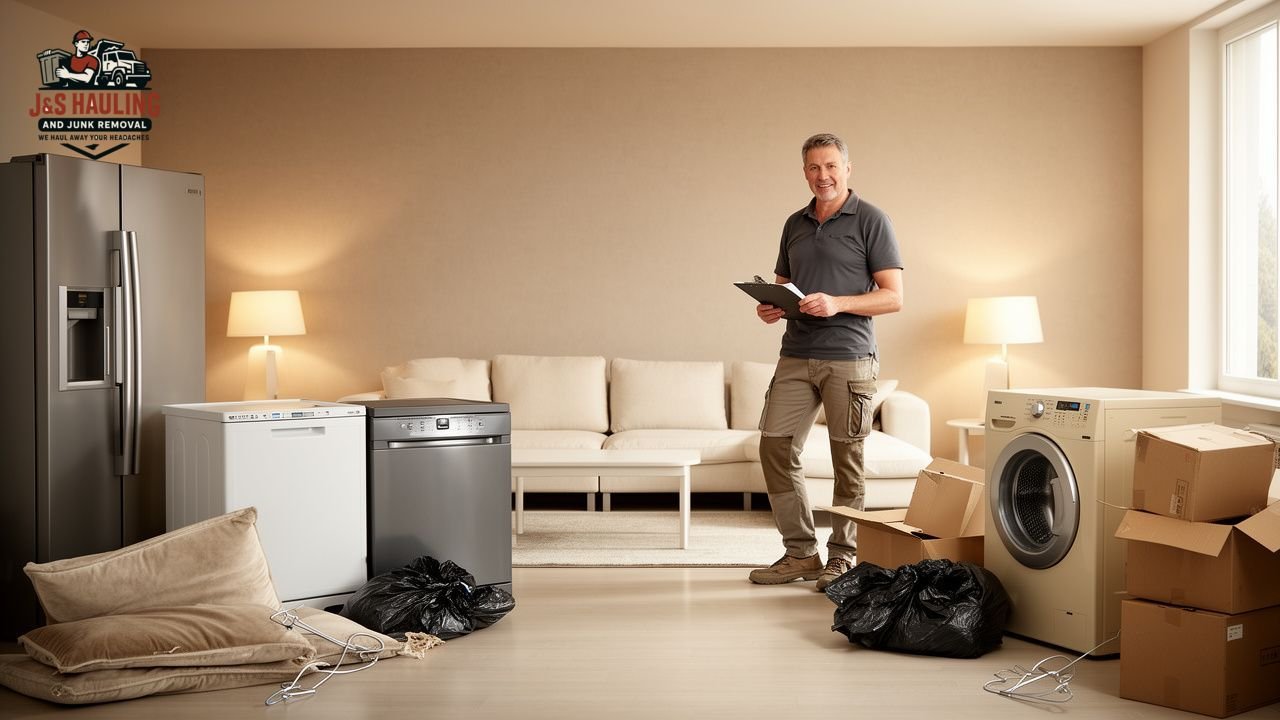
Kitchen items are generally the most frequent requests for old appliance pickup. Refrigerators and freezers are accepted, though they require special handling because of the refrigerants they contain. For a full look at how that specialized process works, see our guide on how refrigerator removal and fridge disposal services work. Dishwashers, ovens, and stoves are also standard items. Microwaves are accepted but often handled separately because they contain high-voltage capacitors and small amounts of lead in their circuit boards.
Laundry and Utility Room Items
Washing machines and clothes dryers are almost universally accepted. These items have high scrap metal value, which makes them ideal for appliance recycling services. Water heaters are another common item, though they must be drained of all water before a crew arrives. Other utility items like trash compactors, space heaters, and humidifiers also fall under the category of acceptable goods.
Small Household Electronics
Smaller items like blenders, toasters, and coffee makers are easily handled. While these are technically appliances, they are often grouped with general household junk. Most commercial junk removal operations will take these in bulk alongside larger units.
Appliances Usually Refused by Removal Crews
While hauling services are flexible, safety and legal requirements create boundaries. Most refusals happen because an item poses a health risk to the crew or requires a specialized hazardous waste license that standard junk removal companies do not carry.
Hazardous and Pressurized Items
Items containing mercury, such as certain old chest freezer switches or thermostats, can be problematic. Most companies refuse pressurized tanks like propane cylinders or oxygen tanks unless they have been professionally decommissioned and certified empty. These items pose an explosion risk during transport and processing.
Chemical and Radioactive Risks
Medical equipment that might contain radioactive isotopes is strictly prohibited. Additionally, appliances that are heavily contaminated with biohazardous materials (such as a freezer full of rotting meat that has leaked into the insulation) might be refused for health and safety reasons.
Items with PCBs
Older appliances manufactured before 1979 might contain Polychlorinated Biphenyls (PCBs) in their capacitors or ballasts. According to information provided by the Environmental Protection Agency, PCBs are toxic chemicals that require specialized disposal methods. If a crew suspects an item contains these substances, they will likely direct the owner to a local hazardous waste facility.
Appliance Disposal and Recycling Standards
Disposal is rarely as simple as dropping an item at a landfill. Modern environmental standards prioritize recycling to keep heavy metals and chemicals out of the soil. A report from The Balance notes that recycling appliances saves significant energy and reduces the need for mining new raw materials.
Metal Recovery
Most large appliances are made of steel, aluminum, and copper. When these items are picked up, they are often taken to scrap metal processors. The metal is shredded and melted down to create new products. This process is the primary reason why many hauling services can offer competitive rates for appliance-heavy loads.
Chemical Management
Refrigerants like Freon are potent greenhouse gases. Federal law requires that these chemicals be recovered by certified technicians before the metal shell of a fridge or air conditioner is crushed. Professional appliance removal services ensure that these items reach facilities capable of safely extracting these gases.
Appliance Removal Specifications and Requirements
The following table outlines common appliances and whether they are typically accepted, along with specific preparation needs.
| Appliance Type | Standard Acceptance | Preparation Required |
| Refrigerators | Yes | Empty contents; disconnect water lines. |
| Air Conditioners | Yes | Must be removed from window/wall brackets. |
| Washing Machines | Yes | Drain all hoses and disconnect power. |
| Gas Stoves | Yes | Disconnect and cap gas lines professionally. |
| Water Heaters | Yes | Must be completely drained of water. |
| Propane Tanks | No | Requires specialized hazardous waste handling. |
| Industrial Fryers | Yes | Must be drained of all grease and oil. |
Things to Consider Before Making a Decision
Before scheduling a pickup, evaluating the condition and location of the appliance is necessary. These factors influence the cost and the ability of a crew to complete the task.
- Path of Removal: Ensure the appliance can fit through doorways and hallways. If a refrigerator is too wide for a door, the doors of the appliance itself might need to be removed first.
- Disconnection Requirements: Most junk removal crews are not licensed plumbers or electricians. They usually require all appliances to be disconnected from gas, water, and power lines before they arrive.
- Weight and Volume: For commercial junk removal, the sheer volume of items can impact logistics. Large industrial ovens or walk-in coolers may require specialized equipment or additional labor.
- Local Regulations: Some municipalities have specific bans on certain items in landfills. Researching local rules can help set expectations for disposal fees.
Practical Tips for Smooth Appliance Removal
Experience in the field shows that a little preparation goes a long way in ensuring a fast and safe pickup.
Bonus Tip 1: Drain Everything
Always drain water from washing machines and dishwashers 24 hours before the appointment. This prevents messy leaks on carpets and floors during the haul-out.
Bonus Tip 2: Tape the Doors
Use heavy-duty tape to secure the doors of refrigerators, dryers, and ovens. This prevents them from swinging open and causing injury or damage to walls during transport.
Understanding the Logistics of Hauling Services
The cost of appliance removal often depends on the weight and the difficulty of the extraction. For specific price ranges by appliance type, see our appliance removal cost guide. While some items are easy to grab from a garage, others require navigating steep stairs or tight corners. Data from Grand View Research indicates that the waste management sector is increasingly moving toward specialized recycling streams, which influences how junk removal companies sort their loads.
By choosing professional hauling, the responsibility of finding a legal disposal site shifts from the homeowner to the company. This ensures that items do not end up illegally dumped, which can lead to heavy fines.
Common Questions about Appliance Disposal
Can I leave my appliance on the curb? Some municipal trash services offer bulky item pickup on specific days. However, many will not take items with refrigerants or heavy metal components. Private junk removal services provide the benefit of lifting the item from inside the home, saving the owner the physical labor.
Do appliances have to be in working order? No. Junk removal companies primarily handle items intended for disposal or recycling. If an item still works, some companies may donate it to local charities, but most are processed for their raw materials.
What happens to the electronics inside appliances? Modern appliances often contain motherboards and sensors. These are treated as e-waste and are usually sent to specialized processors who recover precious metals like gold and silver.
Common Obstacles in Appliance Pickup
Hidden Connections
Often, homeowners forget that a dishwasher is hardwired or that a gas stove has a complex connection. Checking these connections early avoids delays. If a crew arrives and finds an appliance still connected to a live gas line, they will have to refuse the pickup until a professional disconnects it.
Property Damage Concerns
Large appliances are heavy and can easily scratch hardwood or crack tiles. Professional crews use floor runners and specialized dollies to minimize these risks. It is helpful to clear a wide path and remove any tripping hazards like rugs or small furniture before the crew arrives.
Inclement Weather
For outdoor pickups, heavy rain or snow can make moving heavy metal objects dangerous. Slippery surfaces increase the risk of injury. In extreme cases, a company might reschedule to ensure the safety of the workers and the property.
Detailed FAQ
Can junk removal companies take commercial-grade appliances?
Yes, most commercial junk removal services handle industrial-sized items like restaurant ovens, walk-in refrigerator components, and industrial washers. These often require more manpower and larger trucks due to their weight and dimensions.
Is there a limit to how many appliances can be taken at once?
There is generally no limit as long as the truck capacity allows. For large-scale cleanouts, multiple trucks or several trips may be scheduled. It is helpful to provide an accurate count when booking to ensure the right equipment is sent.
Do I need to remove the Freon myself?
Generally, no. Most professional appliance removal services take the unit intact and transport it to a facility that is EPA-certified to extract the refrigerant. You should never attempt to vent refrigerant yourself, as it is illegal and environmentally harmful.
Will a junk removal company take a microwave?
Yes, microwaves are a common item. Because they contain capacitors that can hold an electrical charge even when unplugged, they are handled with care and recycled through electronic waste channels.
Are there extra fees for certain appliances?
Some items, particularly those with refrigerants (fridges, AC units) or those that are exceptionally heavy (cast iron stoves, water heaters), may carry a small environmental or labor surcharge. This covers the cost of specialized recycling and the extra physical effort required.
Final Thoughts on Appliance Removal
Selecting a professional service for appliance disposal ensures that old machines are handled responsibly and legally. J&S Hauling & Junk Removal emphasizes the importance of checking for hazardous materials and ensuring all items are disconnected before the crew arrives. By prioritizing recycling and safe handling, homeowners can clear space without worrying about environmental impact. Evaluate the size, weight, and connection types of your items to help the hauling process go as smoothly as possible.
Junk Removal Support from J&S Hauling & Junk Removal
If you have old appliances taking up space, professional help is available. J&S Hauling & Junk Removal handles the heavy lifting and ensures your items reach the proper recycling or disposal facilities. For questions regarding specific items or to arrange a pickup, contact the office at (618) 310-6823 or reach out via email at jasen@jshauling.com. Clear your space today with a team that understands the local requirements for safe appliance disposal.
Sources
- Environmental Protection Agency – Information regarding the Responsible Appliance Disposal (RAD) program and the handling of hazardous materials in old appliances.
- The Balance – An overview of the economic and environmental benefits of recycling household appliances.
- Grand View Research – Market data and trends regarding the waste management and recycling industry in the United States.