Summarize with
Refrigerator removal services provide a professional solution for transporting and recycling heavy cooling appliances. These services handle the physical labor of moving units out of buildings and ensure that all hazardous components undergo legal processing. A standard service includes an on-site assessment, safe extraction from the property, and transport to a facility where technicians recover refrigerants and recycle metal, plastic, and glass components. Not sure if your specific model qualifies for pickup? See our breakdown of what appliances junk removal companies will take or refuse.
Professional fridge disposal services prioritize environmental safety and structural protection. By using specialized equipment like appliance dollies and floor runners, these teams move bulky units without damaging walls or flooring. Beyond the heavy lifting, the process fulfills federal requirements for the management of ozone-depleting substances. This comprehensive approach solves the logistical challenge of moving a 250-pound machine while meeting strict disposal standards.
The Step-by-Step Logistics of Appliance Removal Services
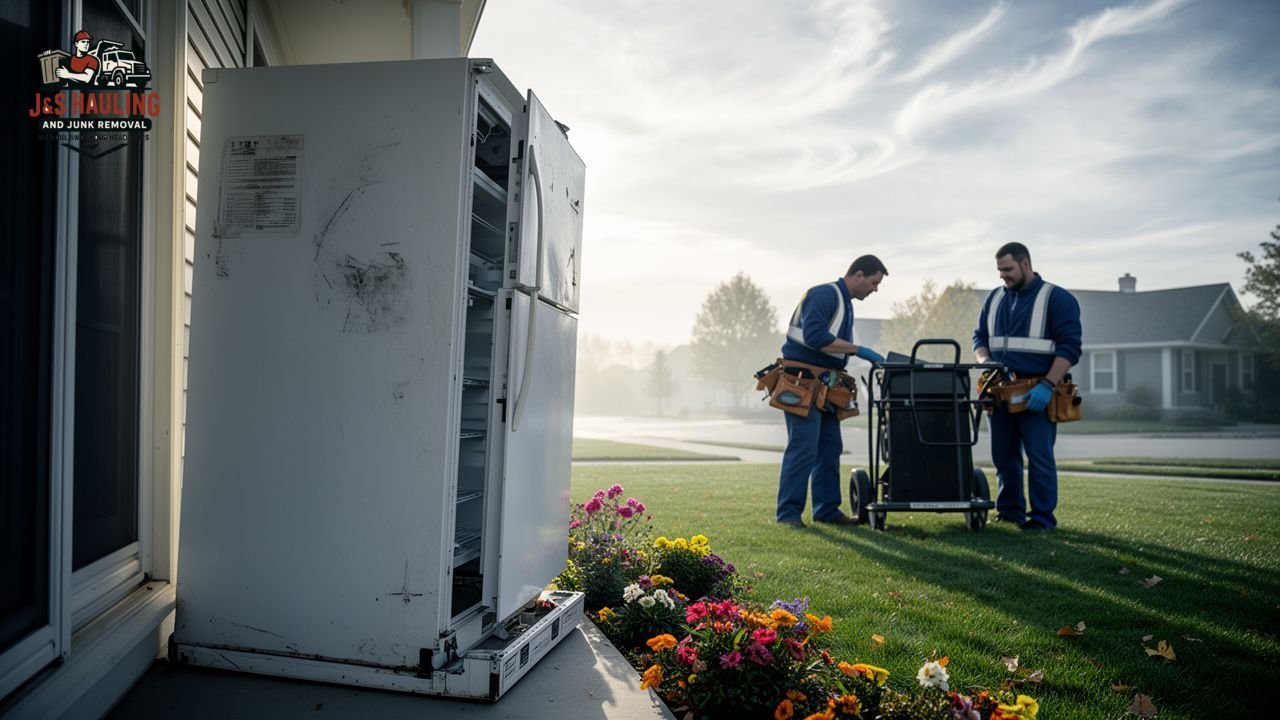
The process begins long before the truck arrives at the property. Scheduling a pickup involves providing details about the size of the unit and the path the team must take to remove it. When the crew arrives, they evaluate the best exit route to avoid tight corners or steep stairs. This site assessment is a vital part of hauling services because it prevents accidental damage to the home.
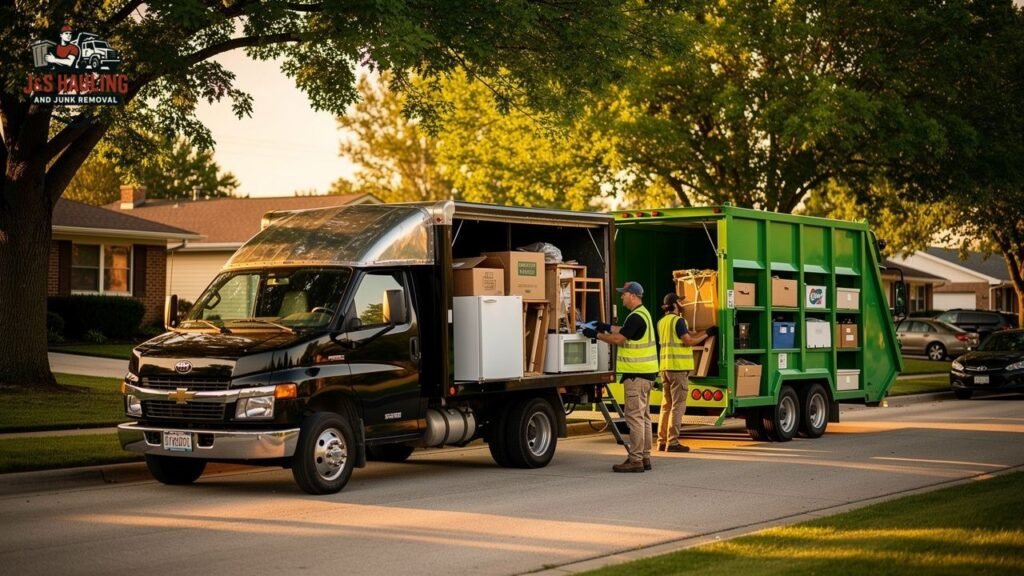
Once a plan is in place, technicians use heavy-duty straps and dollies to secure the appliance. For larger French door models, removing the refrigerator doors is sometimes necessary to fit through narrow interior frames. The unit is then moved to the transport vehicle and secured for transit. Most junk removal services take the appliance to a dedicated transfer station or a scrap metal processor that specializes in white goods.
Bonus Tip: Tape the refrigerator doors shut and coil the power cord before the team arrives. This prevents doors from swinging open during the move and eliminates tripping hazards for the crew.
Environmental Regulations and Refrigerant Recovery Processes
Federal law dictates how cooling units must be dismantled. According to the Environmental Protection Agency (EPA), it is illegal to vent refrigerants like R-22 or R-134a into the atmosphere. These chemicals contribute to ozone depletion and climate change. Professional appliance recycling services use specialized vacuum recovery equipment to capture these gases before the metal shell is crushed.
The recovery process also extends to the insulating foam found in the walls of the unit. Older refrigerators often contain foam blown with ozone-depleting substances. High-end recycling facilities use automated systems to capture these gases during the shredding process. Data from ENERGY STAR indicates that recycling a fridge that is 15 years or older can prevent significant amounts of carbon dioxide equivalent emissions from entering the atmosphere.
Materials Reclaimed During Disposal
Modern recycling centers are highly efficient at sorting the various materials that make up an appliance. The American Iron and Steel Institute reports that steel is the most recycled material on the planet, and refrigerators are a primary source of high-quality scrap metal.
| Material | Recycling Method | Reused Application |
| Steel Shell | Shredding and melting | New appliances, cars, and construction |
| Copper Tubing | Stripping and melting | Electrical wiring and plumbing |
| Glass Shelving | Crushing and sorting | Aggregate materials or new glass |
| Plastic Liners | Pelletizing | Consumer goods and shipping pallets |
| Refrigerant | Purification or destruction | Recycled coolant or chemical neutralization |
Factors to Evaluate Before Selecting Fridge Disposal Services
While the industrial recycling process is highly efficient, the homeowner’s primary role is selecting a qualified service provider to manage the initial extraction. Not all hauling options provide the same level of care or environmental compliance. Property owners should consider several variables to ensure the disposal is handled correctly.
First, confirm the service carries liability insurance. Moving a large appliance through a finished home carries risks of floor scratches or wall scuffs. An insured provider protects the homeowner from these potential costs. For a full price breakdown by appliance type, check our appliance removal cost guide. Second, verify the disposal destination. Reputable appliance removal services can explain exactly where the unit goes and how the hazardous materials are processed.
Third, consider the accessibility of the unit. If the refrigerator is located in a basement or on a second floor with narrow staircases, specific equipment and extra personnel may be required. Providing these details upfront ensures the crew arrives with the right tools for a safe extraction.
Bonus Tip: Defrost the unit at least 24 hours before the scheduled pickup. A leaking, defrosting fridge can create slippery floors and damage carpets during the removal process.
Common Questions Regarding Old Appliance Pickup
Homeowners often wonder if they should try to sell an old unit or simply pay for disposal. If the unit is more than 10 years old, it is likely consuming excessive energy. Reports from the Department of Energy suggest that older units can cost over 100 dollars more per year to operate than modern, efficient models.
Another frequent question involves the removal of food and debris. Most junk removal services require the unit to be completely empty. Leaving food or liquids inside creates a sanitary risk and adds unnecessary weight. It also increases the likelihood of spills during the tilt-and-load phase of the move.
Frequent Questions About Disposal Safety
Can I leave the refrigerator on the curb for a scrap collector?
Leaving a fridge on the curb is often a violation of municipal codes. Unsecured units pose a safety risk to children who might climb inside and become trapped. Additionally, many independent “scrappers” do not have the equipment to recover refrigerants legally. They often cut lines and vent gas into the air to get to the copper inside, which is an environmental hazard.
How do professional services handle commercial walk-in units?
Commercial disposal is more complex than residential removal. It usually involves dismantling panels and managing larger volumes of coolant. Hauling services that specialize in commercial work will typically provide a team of three or more people and specialized cutting tools to break down the unit on-site before transport.
Are there any parts of the fridge that cannot be recycled?
While most of the unit is recyclable, certain items like contaminated oils or specific types of old rubber gaskets might require specialized hazardous waste handling. Professional appliance recycling services sort these items out at the processing plant to ensure they do not contaminate the metal or plastic streams.
What happens if the fridge still works?
If the unit is in good working order and relatively modern, some services may donate it to local charities or non-profits. However, most older units are sent directly to recycling to remove inefficient appliances from the power grid. This helps reduce the overall demand for electricity in the community.
Evaluation of Specific Disposal Needs
Each situation requires a slightly different approach to appliance management. For a standard kitchen replacement, a quick pickup is usually the most efficient path. For renovations involving multiple appliances, a more comprehensive junk removal strategy might be better. J&S Hauling & Junk Removal provides the heavy lifting and logistical support needed to clear space quickly.
Consider the long-term impact of the disposal method chosen. Opting for a service that guarantees refrigerant recovery protects the local environment while solving a difficult physical task. Weigh the cost of the service against the time, physical effort, and potential vehicle damage involved in a DIY attempt. Most find that the speed and safety of professional hauling services far outweigh the risks of moving heavy equipment alone.
Reliable Support for Heavy Item Removal
Managing heavy appliance disposal does not have to be a stressful task for property owners. When professional assistance is required, J&S Hauling & Junk Removal handles the logistics from start to finish. For more information or to schedule a pickup, contact J&S Hauling & Junk Removal at (618) 310-6823 or via email at jasen@jshauling.com. Professional teams ensure that every refrigerator is moved safely and recycled according to current environmental standards.
Sources
- Environmental Protection Agency (EPA) – Information regarding the Responsible Appliance Disposal (RAD) program and refrigerant laws.
- ENERGY STAR – Data on energy savings and the environmental impact of recycling old appliances.
- American Iron and Steel Institute – Statistics on the recyclability of steel and its role in the circular economy.
- Department of Energy – Guidelines on appliance efficiency and the costs of operating older cooling units.
- Environmental Protection Agency (EPA) Section 608 – Detailed regulations on the handling and recovery of stationary refrigerants.