Summarize with
Professional appliance removal typically costs between $70 and $200 for a single item. This price range covers the labor, transportation, and proper disposal of common household units like refrigerators, stoves, and washing machines. When disposing of multiple items at once, the cost per unit often decreases, though the total bill will reflect the increased weight and volume.
Most service providers establish a minimum fee to cover the logistics of sending a truck and crew to a location. Homeowners and business managers can expect to pay higher rates for items that require specialized handling, such as refrigerators containing Freon or heavy industrial machinery. Understanding these costs helps in planning a renovation or a simple property cleanout without encountering unexpected expenses.
Primary Factors Affecting Appliance Removal Cost
Several variables dictate the final price of appliance hauling services. Distance is a primary factor. If the pickup location sits far from a recycling center or landfill, the service provider will likely adjust the rate to account for fuel and time. Accessibility also plays a significant role in pricing. Removing a freezer from a basement with narrow stairs requires more labor and time than picking up a unit already sitting in a driveway. For additional information about disposal methods and pickup considerations, this appliance removal guide provides helpful insights.
Weight remains one of the most consistent cost drivers. Heavy items like cast-iron stoves or high-end commercial ovens require additional manpower or specialized equipment like stair-climbing dollies. According to data from HomeAdvisor, the national average for general junk removal falls between $150 and $350, though individual appliance pickups sit at the lower end of that spectrum if the item is easily accessible. For a closer look at how these national averages break down by load size, see our guide on how much junk removal costs.
Common Appliance Disposal Pricing by Item
Different appliances carry different disposal requirements, which is reflected in the price. Refrigerators and freezers are generally the most expensive to remove because they contain refrigerants. Federal law requires the safe recovery of these chemicals before the metal can be recycled. See our complete guide on how refrigerator removal and disposal services work for the full extraction and recycling process.
| Appliance Type | Estimated Removal Cost | Specialized Requirements |
| Refrigerator or Freezer | $75 to $150 | Refrigerant (Freon) recovery |
| Washing Machine or Dryer | $70 to $110 | Water drainage and lint clearing |
| Dishwasher | $60 to $90 | Disconnection from plumbing |
| Oven or Stove | $70 to $120 | Gas line or high voltage safety |
| Microwave or Small Electronics | $15 to $40 | E-waste recycling protocols |
A report from the Environmental Protection Agency indicates that millions of refrigerators are disposed of annually. The complexity of managing the hazardous components in these units justifies the higher price point compared to a simple dryer or dishwasher.
Commercial Junk Removal for Large-Scale Projects
Businesses often face different challenges than residential customers. Commercial junk removal usually involves larger quantities of equipment or heavy-duty industrial machines. Restaurants, for example, might need to dispose of walk-in freezers or commercial-grade ranges that weigh significantly more than standard household models.
For these projects, pricing often shifts from a per-item model to a volume or weight-based model. A service provider might charge by the truckload or half-truckload. This approach is common in office cleanouts where several printers, water coolers, and breakroom appliances need to go at once, often alongside old desks, chairs, and other furniture covered in our furniture removal cost guide. Professional crews equipped for commercial work bring the necessary insurance and heavy-duty tools to handle these larger loads safely.
Appliance Recycling Services and Environmental Impact
Proper disposal involves more than just a trip to the local dump. Most modern appliance hauling services prioritize recycling. Appliances are primarily made of steel, which has a high salvage value. Once the non-metal components and hazardous fluids are removed, the remaining shell is crushed and sent to a foundry.
Data from Statista shows the waste management industry continues to expand as recycling regulations become more stringent. Using a professional service ensures that the old appliance does not end up in a landfill, where it could leak chemicals into the soil. Recycling also reduces the energy required to manufacture new metal products.
Bonus Tip: Before scheduling a pickup, check with local utility companies. Some organizations, as noted by Energy Star, offer small rebates or even free pickup for older, working refrigerators to encourage the transition to energy-efficient models.
Things to Consider Before Making a Decision
While the environmental benefits are clear, individual preparation is the next step in ensuring a smooth pickup. Before hiring a crew for old appliance removal, a few steps can save time and potentially lower the cost.
- Disconnection: Most haulers are not licensed plumbers or electricians. Ensure all appliances are disconnected from gas, water, and power lines before the crew arrives.
- Path Clearance: Move furniture, boxes, or rugs that might obstruct the path. A clear route reduces the risk of property damage and speeds up the process.
- Local Regulations: Some municipalities have strict rules about curbside disposal. Professional services stay updated on these laws to avoid fines.
- Consolidation: If there are multiple items, such as an old water heater or a pile of scrap metal, it is often cheaper to have them all hauled at once rather than scheduling separate trips.
Pro Tip: Drain the water from washing machines and dishwashers 24 hours before the scheduled pickup. This prevents messy leaks on your floors during the removal process.
Common Questions About Professional Removal
Many people wonder if they should attempt to move these items themselves. A standard refrigerator can weigh 250 to 450 pounds. Without the right equipment and experience, moving such an object poses a risk of back injury or damage to door frames and flooring.
Another common inquiry involves the fate of the appliance. Reliable services do not simply dump items in a field. They sort the materials, ensuring that plastic, glass, and metal go to the appropriate processing facilities. This specialized handling is a core part of the appliance disposal pricing structure.
Expert Tip: Take photos of the appliance and the path the movers will take. Sharing these photos with the service provider can result in a more accurate over-the-phone estimate.
Factors Beyond Labor and Transport
Insurance and licensing are hidden costs that protect the property owner. A legitimate service carries general liability insurance and workers’ compensation. If a heavy stove slips and cracks a tile floor, or if a worker is injured on the property, the insurance coverage ensures the homeowner is not held financially responsible. These protections are built into the standard appliance removal cost.
Furthermore, disposal fees at transfer stations and recycling centers are not free. These facilities charge by weight or by the specific type of item. For example, some centers charge a specific “surcharge” for items with compressors. These external fees are usually bundled into the total quote provided by the hauling company.
Understanding the Removal Process
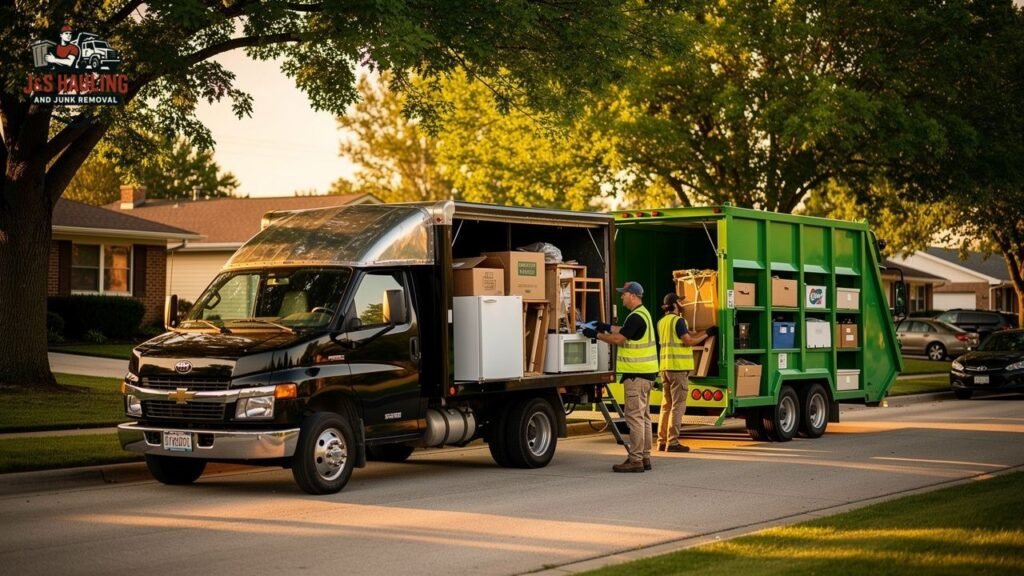
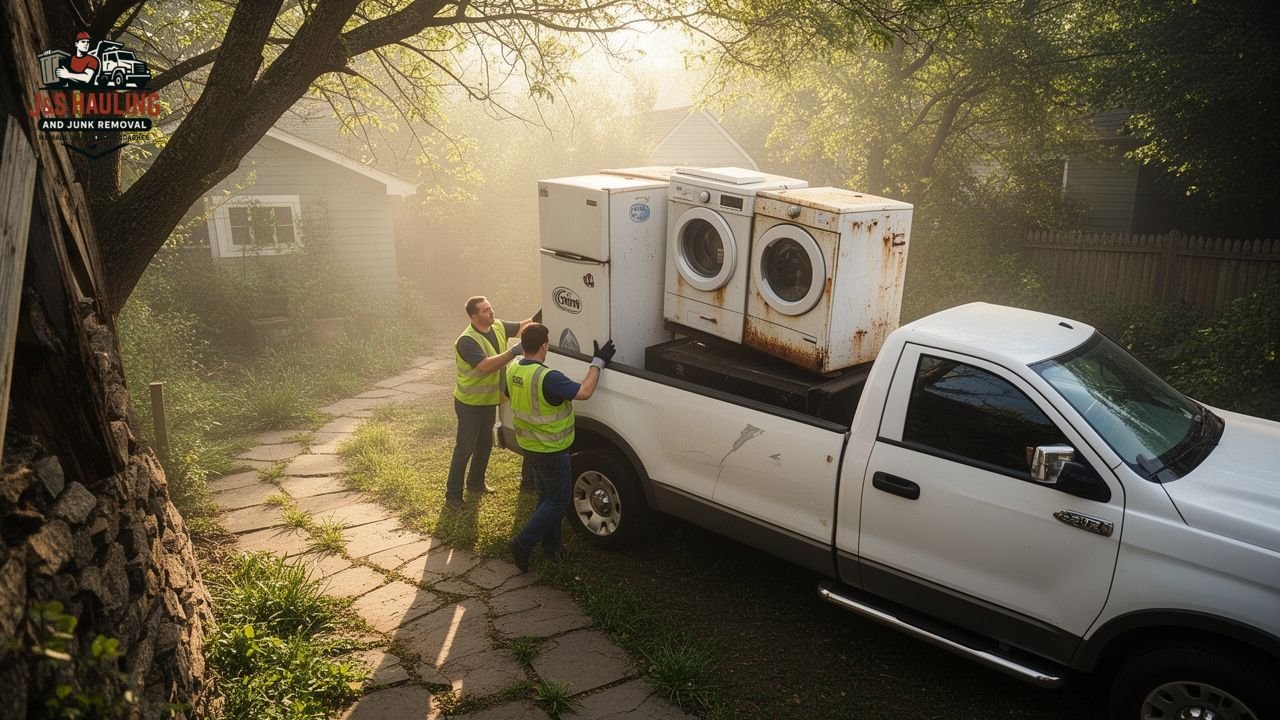
The process starts with a request for a quote, followed by a scheduled arrival window. Once on-site, the team evaluates the item to confirm the price. Using specialized straps, dollies, and ramps, they move the appliance to the truck. This systematic approach minimizes the time spent on the property and ensures the safety of both the workers and the home’s interior.
The Grand View Research market analysis highlights that consumer demand for professional removal is rising because people value their time and physical safety more than the cost of a DIY haul. Paying for a professional service eliminates the need to rent a truck, buy specialized moving gear, and find a legal disposal site.
Expert Advice for Appliance Disposal
When looking at various appliance hauling services, the lowest price is not always the best indicator of value. Verify that the company uses responsible disposal methods. It is helpful to ask where the items will be taken. A service that mentions specific recycling partners or transfer stations demonstrates a commitment to legal and environmental standards.
For those managing a commercial property or a large estate, requesting an on-site estimate is the most effective way to avoid price changes. It allows the service provider to see the exact logistical challenges, leading to a firm and fair price.
Frequently Asked Questions
Can appliances be left on the curb for pickup?
While some city waste programs offer bulk pickup days, many do not accept large appliances due to recycling laws. Professional services can pick up items from the curb, often at a slightly lower rate because they do not have to enter the building.
Does the age of the appliance affect the cost?
Age generally does not change the price unless the unit is extremely old and contains hazardous materials that are no longer common. The size and weight are much more important factors than the manufacture date.
Is it cheaper to take the appliance to the dump personally?
Doing it yourself might seem cheaper, but after factoring in truck rental, fuel, and disposal fees at the gate, the savings are often minimal. Professional services provide the labor and equipment that a DIY approach lacks. If you’re weighing a self-managed dumpster against full-service hauling, our dumpster rental vs junk removal comparison breaks down the trade-offs.
Are there items that haulers will not take?
Most companies take all standard household and commercial appliances. However, items that are heavily contaminated with hazardous chemicals or those that are actively leaking oil or dangerous fluids might require a specialized hazardous waste team. For a full breakdown by appliance type, see our guide on what appliances junk removal companies can take or refuse.
Summary of Hauling Considerations
Navigating the costs of appliance removal requires a balance of understanding labor, weight, and disposal fees. While a single item usually costs around $70 to $200, the peace of mind coming from professional handling and environmental compliance is significant. Homeowners should focus on clearing a path and disconnecting utilities to ensure a smooth transition. Evaluating the specific needs of the project, whether it is a single refrigerator or a full suite of commercial kitchen gear, allows for an accurate budget and a successful removal.
Get Professional Hauling Assistance
Managing heavy machinery and old equipment is a task for professionals. J&S Hauling & Junk Removal provides reliable solutions for clearing out unwanted items safely and efficiently. For a clear estimate on your next project, contact J&S Hauling & Junk Removal at (618) 310-6823 or reach out via email at jasen@jshauling.com. Professional assistance ensures that your property remains undamaged and that your old appliances are handled according to all local and federal recycling guidelines.
Sources
- Environmental Protection Agency – Information regarding refrigerator and freezer recycling, facts, and the importance of refrigerant recovery.
- HomeAdvisor – A comprehensive breakdown of national average costs for various junk and appliance removal services.
- Energy Star – Guidance on finding refrigerator recycling programs and utility rebates for energy-efficient upgrades.
- Statista – Statistics and market data concerning the growth and revenue of the waste management and recycling industry.
- Grand View Research – Market analysis of the junk removal industry and consumer trends toward professional disposal services.