Summarize with
Quick Answer: The easiest way to dispose of tree branches is to use curbside yard waste collection or take them to an approved green waste facility. You can also turn smaller limbs into mulch or compost them. Large piles and storm-damaged limbs may require professional hauling. Your best option depends on branch size and quantity. Local disposal rules also determine whether you can burn or place branches in regular waste containers.
Tree trimming keeps your yard manageable. However, the cleanup can become difficult when branches and brush cover your lawn or driveway. Storms can make the problem worse by leaving broken limbs and fallen tree sections across your property. Knowing how to dispose of tree branches helps you choose a safe and affordable cleanup method.
Some homeowners can handle small amounts through municipal yard waste programs. Others need a chipper or hauling service for heavier loads. The right approach depends on the amount of debris and the condition of the wood. You should also consider local collection schedules and disposal restrictions before moving anything.

Key Takeaways
- Use municipal yard waste pickup when branches meet local size requirements.
- Turn clean branches into mulch with a suitable wood chipper.
- Compost small twigs and untreated woody material.
- Check local regulations before burning yard debris.
- Keep storm-damaged limbs away from power lines and unstable trees.
- Hire a hauling service when debris is too heavy or bulky to manage.
How to Dispose of Tree Branches After Trimming or a Storm
There are several ways to handle branches after routine pruning or severe weather. The best method depends on the volume of debris and the equipment available. Separate small twigs from thick limbs before choosing a disposal method. This makes loading and transportation easier.
Use Curbside Yard Waste Collection
Curbside collection is a convenient option for homeowners with manageable amounts of branches. Many municipalities offer seasonal or scheduled yard waste pickup.
Before placing branches outside:
- Check the local collection calendar.
- Confirm maximum branch length and diameter.
- Bundle branches according to local requirements.
- Keep piles away from sidewalks and storm drains.
- Remove plastic ties or other materials if prohibited.
Some communities require branches to be bundled while others accept loose brush at designated collection points. Collection may also stop during certain seasons. Do not assume that regular garbage pickup accepts tree limbs. Confirm the rules with your municipal waste department first.
Take Branches to a Green Waste Facility
A yard waste or green waste facility can accept larger quantities of natural vegetation. These facilities may process branches into mulch or compost. This option works well when your municipality does not offer bulk pickup. It is also useful when you have more material than your regular collection service allows.
Before transporting the load:
- Find a nearby yard waste drop-off facility.
- Ask whether it accepts branches and thick tree limbs.
- Confirm whether there are weight or vehicle restrictions.
- Separate clean wood from construction debris.
- Secure the load before driving.
Not every facility accepts large logs or mixed storm debris. Some only accept leaves and smaller branches. For residents across the St. Louis metropolitan area, the correct facility may depend on whether the property is in Illinois or Missouri. Check the relevant local waste authority before making the trip.
Turn Branches Into Mulch
Wood chips provide a useful way to reuse branches instead of sending them to disposal. A wood chipper breaks suitable limbs into smaller pieces that can be used around landscaping. Mulch helps retain soil moisture and reduces weed growth. It can also protect exposed soil from erosion.
To make mulch:
- Remove stones and other hard objects from the branches.
- Cut oversized limbs into manageable sections.
- Feed only suitable branches into the chipper.
- Spread the finished wood chips around garden beds.
- Keep mulch away from direct contact with tree trunks.
Avoid chipping diseased or pest-infested wood for use around healthy plants. Check whether the material needs special disposal. For large amounts of woody debris a commercial chipper may be more practical than a small residential machine.

Get a Free Hauling Quote
Compost Small Branches and Twigs
Composting works best with smaller pieces of untreated woody material. Large branches take much longer to break down and should be chipped or cut before adding them. You can combine shredded branches with leaves and grass clippings to create a useful soil amendment.
Follow these steps:
- Break branches into small pieces.
- Remove treated or painted wood.
- Mix woody material with suitable green waste.
- Maintain moisture without soaking the pile.
- Turn the compost periodically to improve airflow.
Wood chips and dry leaves provide carbon-rich material. Grass clippings and other green waste supply nitrogen. The U.S. Environmental Protection Agency explains how organic materials can be composted and how proper moisture and airflow support decomposition.
Offer Usable Wood to Other People
Some branches and larger logs may have value to people who use wood for projects or heating. Offering suitable material locally can reduce the amount you need to haul away. You can contact neighbors or post an offer in local community groups.
Potential uses include:
- Firewood for people with suitable equipment.
- Woodworking projects.
- Garden borders and rustic landscaping.
- Natural habitat piles where permitted.
Only offer clean and suitable wood. Avoid distributing material from diseased trees or branches that contain pests. Also remember that freshly cut wood may need to dry before it becomes suitable firewood.
Hire a Junk Removal Service for Large Piles
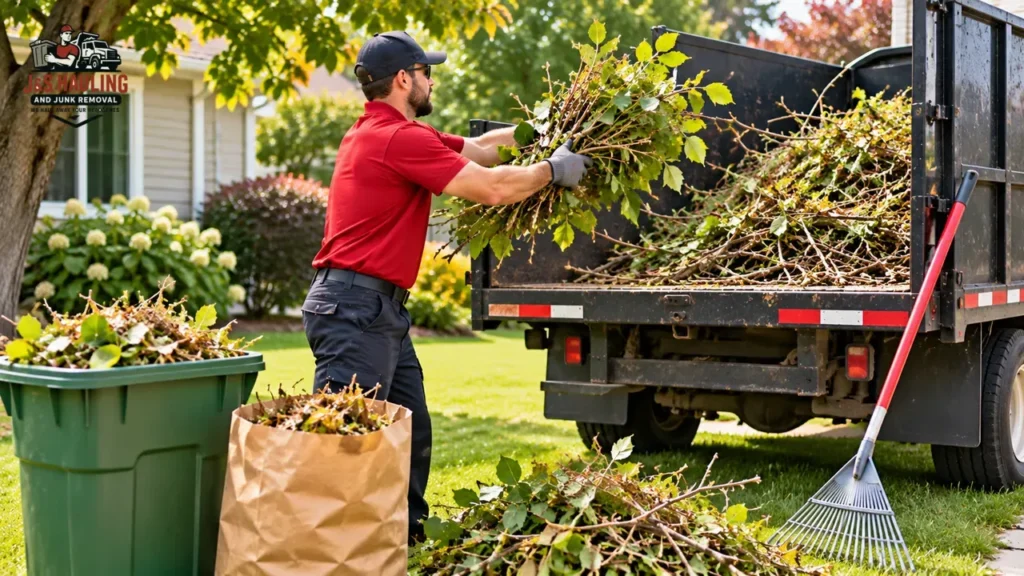
Professional hauling is a practical choice when branches cover a large part of your property. It saves you from repeated trips to disposal facilities and handling heavy loads. This option is particularly useful after storms or major landscaping projects.
A professional branch removal service may handle:
- Gathering loose branches.
- Loading heavy tree limbs.
- Removing brush piles.
- Clearing accessible yard debris.
- Transporting collected material for appropriate disposal.
J&S Hauling and Junk Removal provides hauling and debris removal services across its St. Louis metropolitan service area. Contact the company to confirm the material and quantity it can collect.
How to Get Rid of Branches After Storm Damage
Storm cleanup requires more care than ordinary yard maintenance. Broken limbs may be unstable and can remain under tension after falling. Start by checking the property for immediate hazards. Do not approach branches touching power lines or trees that appear ready to fall.
Inspect the Property Before Cleanup
Walk around the affected area from a safe distance. Look for hanging limbs and fallen branches near buildings or vehicles.
Pay attention to:
- Split trunks.
- Exposed tree roots.
- Cracked major limbs.
- Branches resting on roofs.
- Trees leaning toward structures.
- Electrical wires caught in vegetation.
Contact your utility provider if branches are touching electrical lines. Call a qualified tree professional when the tree is unstable or large limbs are suspended overhead.
Separate Storm Debris by Material
Not all storm debris belongs in the same disposal pile. Sorting it first makes removal easier and helps prevent contamination at recycling facilities.
| Material | Recommended handling |
|---|---|
| Small twigs | Compost or yard waste collection |
| Clean branches | Chipping or green waste facility |
| Large limbs | Cut by a qualified professional |
| Fallen logs | Check facility acceptance or reuse options |
| Diseased wood | Follow local disposal guidance |
| Mixed storm debris | Separate organic and non-organic materials |
Illinois EPA advises residents to check with landfill operators about temporary acceptance of trees and branches after storms. Landscape compost facilities may accept clean vegetation when it is separated from other storm debris.
Arrange Professional Storm Debris Removal
Large cleanup projects can require more than ordinary yard waste collection. Fallen limbs may be too heavy to lift or too large for residential vehicles.
- Professional storm debris removal can reduce the physical work involved in clearing accessible debris. It also helps homeowners avoid repeated transportation trips.
- Before scheduling service, describe the size of the pile and identify any access restrictions. Mention whether branches are behind a fence or scattered across the yard.
- Remember that hauling companies and tree removal professionals handle different tasks. A hauling service may collect accessible debris but should not be expected to cut down unstable trees or remove dangerous overhead limbs.
How to Prepare Branches for Safe Disposal
Preparing branches properly makes collection easier and reduces the risk of injuries. Similar care is important when removing leaves from your yard, as proper cleanup helps prevent debris buildup and keeps outdoor spaces manageable. It also helps prevent damage to vehicles and equipment.
Cut Branches Into Manageable Sections
Small branches can be bundled, while thicker limbs may need to be cut into shorter sections. Follow the length limits set by your local collection provider. Use suitable pruning tools for small material. Leave large or overhead cutting jobs to trained professionals.
Wear Protective Equipment
Gloves and sturdy footwear protect your hands and feet during basic yard cleanup. Eye protection is also important when handling dry branches that may snap or release debris. Avoid using a chainsaw without the proper training and protective equipment.
Keep the Collection Area Accessible
Place prepared debris in an accessible area when your collection provider requires curbside placement.
Do not block:
- Driveways
- Sidewalks
- Fire hydrants
- Storm drains
- Public roads
Keep piles away from overhead utility lines and areas where vehicles need to pass.
| Tip: Take photographs of the debris before moving it. This helps when requesting a hauling estimate and allows the service provider to understand the size of the cleanup. |
Local Tree Branch Disposal Rules in the St. Louis Area
Disposal requirements can differ between municipalities. Homeowners in Granite City and nearby Illinois communities should check local collection schedules before setting branches outside. The same applies to properties in St. Louis, Missouri, because Illinois disposal rules do not automatically apply across the state line.
Check Municipal Yard Waste Programs
Residents in Granite City, Edwardsville, Belleville, and O’Fallon should check their respective municipal waste services for collection dates and accepted materials.
Ask about:
- Seasonal brush collection.
- Maximum branch dimensions.
- Bundling requirements.
- Drop-off locations.
- Fees for oversized loads.
These details matter after spring trimming and fall storms when collection demand can increase.
Understand Illinois Open Burning Restrictions
Burning may seem like a quick disposal method, but it is not automatically allowed everywhere.
- Illinois EPA explains that landscape waste burning is subject to local restrictions. Municipalities can limit burning hours or prohibit it entirely.
- Disaster-related burning also follows separate conditions. A declared disaster and applicable local requirements can affect which materials may be burned.
Keep Yard Waste Separate From Other Storm Debris
Storm cleanup can produce more than branches. Damaged roofing materials and insulation may be mixed with natural vegetation. Separate these materials before taking them to a disposal facility. Mixing waste can prevent clean vegetation from being accepted for composting.
| Pro Tip: If a storm creates a large debris pile, contact your municipal waste department before loading a truck. Ask whether temporary collection sites or special storm cleanup schedules are available. |
What Makes Professional Brush Removal Worth Considering?
Professional brush removal is useful when the amount of debris exceeds what you can manage with ordinary yard tools. It is also helpful when you want to clear a property without renting equipment.
Consider professional hauling when:
- Branches cover a large yard.
- Heavy limbs are difficult to move.
- You have limited transportation space.
- Municipal pickup cannot handle the volume.
- You need to clear a property quickly.
- Several piles are spread across different areas.
J&S Hauling and Junk Removal serves residential and commercial customers across its listed service areas. Its hauling services and debris removal options can help with suitable yard cleanup projects.
What Affects the Cost of Branch Hauling?
The amount of debris is one of the main factors that affects a hauling estimate. Access and material size can also influence the work involved.
| Pricing factor | How it affects the job |
|---|---|
| Pile volume | Larger piles require more truck space |
| Branch size | Thick limbs may require additional handling |
| Weight | Heavy wood can increase loading demands |
| Accessibility | Difficult access can increase labor |
| Debris location | Scattered piles may take longer to collect |
| Disposal requirements | Special handling may affect the total |
Ask for an upfront quote before scheduling. Share photographs and explain whether the branches are already cut and stacked.
Frequently Asked Questions
How to dispose of large tree branches for free?
Check whether your municipality offers free brush collection or designated yard waste drop-off sites. You can also offer usable branches to neighbors or turn suitable wood into mulch if you have the right equipment.
Do storm damaged trees need to be clean cut?
Yes. Broken limbs should receive proper pruning cuts when it is safe to perform the work. Large damaged branches and unstable trees should be assessed by a qualified arborist.
Can you put branches in your garbage can?
Small twigs may be accepted in some areas, but large branches usually have separate disposal requirements. Check your local waste collection rules before placing them in a garbage container.
How many branches can you cut off a tree without killing it?
There is no single safe number because branch size and tree condition matter. A common pruning guideline is to avoid removing more than 25% of a healthy tree’s live canopy in one growing season. Some trees need much less pruning.
Does homeowners insurance pay for tree removal after a storm?
Coverage depends on your policy and the damage caused. Insurance may cover removal when a fallen tree damages an insured structure. A tree that falls without damaging covered property may not qualify. Review your policy and contact your insurer.
Conclusion
Choosing the right disposal method depends on the size of your branches and the amount of cleanup required. Small twigs can go into suitable compost piles while clean limbs may be chipped into mulch. Municipal collection and green waste facilities are also useful options when they accept your material. Large storm debris requires more planning and careful handling.
For homeowners who need help clearing accessible yard debris, J&S Hauling and Junk Removal offers hauling solutions across the St. Louis metropolitan area. Contact the company to discuss your cleanup and request a quote.
Professional Branch and Brush Removal With J&S Hauling and Junk Removal
Do not let piles of branches take over your driveway or yard. J&S Hauling and Junk Removal can help you clear suitable debris without the repeated lifting and transportation work. Whether you have branches left after trimming or a large pile following a storm, contact the team to discuss your removal needs.
Sources
Illinois EPA – Storm and Flood Debris Disposal
Explains proper disposal of storm debris and the handling of tree branches and brush after severe weather.
Illinois EPA – Open Burning Permits
Provides information about landscape waste burning and applicable restrictions in Illinois.
U.S. EPA – Composting
Explains organic waste composting and the conditions required for effective decomposition.