Summarize with
Fallen leaves, broken branches, grass clippings, and overgrown brush can pile up quickly, especially during fall and after storms. Knowing how to manage yard waste removal helps keep your lawn tidy, prevents blocked drains, and saves you from unnecessary trips to a disposal site. The right approach depends on the amount of debris, local collection rules, and whether the material can be reused.
Homeowners can handle small piles through composting, curbside collection, or local drop off sites. Larger cleanups may require professional hauling. J&S Hauling and Junk Removal helps property owners deal with unwanted debris through practical junk removal solutions. Junk removal services are worth exploring when yard waste removal becomes too large to handle alone.

Identify the Yard Waste Removal
The first step in yard waste removal is to sort the material by type. Leaves, grass clippings, small twigs, and woody branches may all come from the same cleanup, but they do not always belong in the same disposal stream.
Common types of outdoor debris include:
- Leaves: Fallen leaves from trees and shrubs, including damp piles collected after rain.
- Branches and twigs: Small pieces from pruning, broken limbs, and routine tree maintenance.
- Brush: Tangled shrubs, vines, hedge trimmings, and small woody plants.
- Grass clippings: Cut grass left after mowing.
- Garden debris: Weeds, dead flowers, spent vegetable plants, and soft plant stems.
- Tree debris: Larger limbs and woody material left after trimming or storm damage.
Some materials need separate handling. Soil, rocks, sod, treated lumber, plastic pots, and construction debris can contaminate a load intended for composting or mulching.
Start by creating separate piles for leaves, small plant trimmings, and larger branches. Keep nonorganic materials in another area. This simple step makes yard waste removal easier and reduces the chance of paying extra because the load contains materials the disposal facility will not accept.
Compare Yard Waste Cleanup Options
The best yard waste removal method depends on the size of the pile, the condition of the material, and how much time you can spend handling it. A few bags of leaves may not require a hauling service, while a large brush pile can take several hours to load and transport.
| Cleanup method | Best for | Main advantage | Main limitation |
|---|---|---|---|
| Backyard composting | Leaves, grass, soft plant material | Low ongoing cost | Requires space and time |
| Lawn mulching | Thin layers of dry leaves | Feeds the lawn as material breaks down | Thick layers can smother grass |
| Curbside collection | Small, sorted piles | Convenient when available | Pickup rules and schedules apply |
| Drop off facility | Bagged leaves and bundled branches | Useful for larger personal loads | Requires transport and possible fees |
| Professional hauling | Large piles and mixed cleanup debris | Saves loading and transport effort | Costs more than handling small piles yourself |
For small seasonal jobs, combine methods where possible. Leave a thin layer of chopped leaves on the lawn, compost suitable plant material, and reserve the remaining debris for collection.
For bigger projects, review the available junk removal pricing factors to understand what can affect the cost of clearing unwanted material.
| Tip: Take a photo of the entire pile before requesting a quote. Include the surrounding area and any large branches so the hauling company can better understand the amount of material involved. |
Follow Local Yard Waste Disposal Rules
Local regulations determine where leaves, grass, branches, and brush can go. Before placing bags at the curb or driving to a disposal facility, check the rules published by your city, county, or waste collection provider.
The U.S. Environmental Protection Agency reported that Americans generated approximately 35.4 million tons of yard trimmings in 2018. About 22.3 million tons were composted or used for wood mulching, showing how much plant material can be recovered instead of discarded. These figures are historical national estimates, not current local collection totals. See the EPA’s national waste and recycling statistics.
Local rules can differ in several important ways:
- Bag requirements: Some programs accept paper lawn bags or designated carts but reject plastic bags.
- Branch preparation: Branches may need to be cut to a specific length and tied into manageable bundles.
- Collection limits: A city may limit the number of bags or bundles accepted during each collection.
- Seasonal schedules: Some communities offer leaf collection only during particular months.
- Drop off restrictions: Facilities may accept leaves but refuse stumps, soil, treated wood, or mixed trash.
For a practical example, the City of Champaign’s yard waste information provides local guidance on its program. Its requirements should not be assumed to apply elsewhere.
Before loading a vehicle, confirm the destination accepts your material and ask about fees, hours, quantity limits, and unloading requirements. Proper planning prevents rejected loads and wasted trips, and it makes yard waste disposal less stressful.
Reuse Leaves and Grass Before Throwing Them Away
Not every bag needs to leave your property. Leaves and grass clippings can serve useful purposes when handled correctly, reducing the amount you need to transport or pay to dispose of. Reusing material is often the most affordable first step in yard waste removal.
Mulch Leaves Into the Lawn
A light layer of dry leaves can be chopped with a lawn mower and left between grass blades. The smaller pieces break down more easily and return organic matter to the soil.
Avoid leaving thick, wet layers on the lawn. Heavy coverage blocks light and airflow, which can damage grass. If the leaves are too thick to chop into small pieces, collect the excess.
Compost Leaves and Grass Clippings
Leaves provide carbon rich material, while fresh grass clippings supply nitrogen. Combining them in a compost pile helps the material break down into a useful soil amendment.
For better results:
- Shred large leaves to help them decompose.
- Mix dry leaves with smaller amounts of fresh grass.
- Keep the pile slightly moist, similar to a wrung out sponge.
- Turn the material periodically to introduce air.
Avoid adding plastic, treated wood, pet waste, or diseased plants unless your composting system specifically handles them safely.
Grass clippings can also remain on the lawn after mowing when they are short and evenly distributed. Thick clumps should be spread out or collected.
Turn Suitable Branches Into Wood Chips
Small branches can be chipped for garden paths, landscaping, or mulch around suitable plants. Keep mulch away from direct contact with tree trunks and plant stems to reduce moisture and pest problems.
The EPA’s waste management hierarchy places source reduction and reuse, recycling, and composting among preferred waste management approaches. Reusing clean plant material is a sensible first option when it suits your property.

Handle Leaves, Branches, and Brush Separately
Different materials require different preparation. Sorting them before yard waste removal helps prevent rejected loads and makes the work safer.
Leaf Removal
For leaf removal, rake leaves into manageable piles and use the bags or containers accepted by your local program. Let very wet leaves drain when practical because soaked bags become heavy and harder to carry.
Do not leave large piles beside storm drains. Wind and rain can push leaves into drainage openings, increasing the risk of localized water buildup.
Branch and Twig Disposal
Small twigs can usually be bundled or placed in an approved yard waste container. Cut branches into manageable sections if local rules permit it, and keep the bundles within the stated length and weight limits.
For large limbs, use proper cutting equipment and avoid working near power lines. Branches under tension can move suddenly when cut. Leave hazardous tree work to qualified professionals.
Brush Removal
For brush removal, separate loose branches from tangled vines, shrubs, and bulky hedge trimmings. Remove plastic ties, wire, plant pots, and other nonorganic items before collection.
If you are clearing a fence line or overgrown corner, work in sections rather than dragging the entire pile at once. This reduces strain and makes it easier to identify sharp objects or hidden debris.
| Tip: Keep branches stacked in one direction with cut ends facing the same way. A uniform pile is easier to measure, load, and transport. |
Grass and Garden Debris
Grass clippings and soft garden waste break down faster than thick branches. Keep them separate when your local composting program requires it. Avoid mixing in soil, gravel, or landscape fabric unless the receiving facility specifically allows those materials.
Estimate the Cost of a Yard Cleanup
The cost of yard debris removal depends on the amount of material, the labor needed to collect it, the distance to the disposal site, and the type of debris. A small bag collection costs much less than clearing a yard after a major storm.
The following figures are general planning estimates in U.S. dollars, not verified quotes from a specific provider. Actual rates vary by market and company.
| Service or method | Estimated cost | What affects the price |
|---|---|---|
| DIY bagging and transport | $10 to $60 | Bags, fuel, and disposal fees |
| Small curbside cleanup | $0 to $50 | Local program fees and bag limits |
| Small professional pickup | $75 to $200 | Volume, access, and labor |
| Medium pile of leaves and branches | $150 to $350 | Loading time and truck space |
| Large brush or seasonal cleanup | $300 to $700 or more | Pile size, heavy branches, and labor |
These ranges are broad budgeting guides. A municipal program may be free for eligible residents, while a private service may charge a minimum pickup fee even for a relatively small load.
What Can Increase the Bill?
Several factors can change the final yard waste removal quote:
- Volume: A large, loose pile can fill truck space quickly even if it is lightweight.
- Weight: Wet leaves and heavy branches take more effort to handle than dry material.
- Accessibility: Debris in a backyard, behind a fence, or far from the driveway can require additional labor.
- Preparation: Uncut limbs and tangled brush may take longer to load.
- Contamination: Dirt, rocks, plastic, and treated lumber may require separate disposal.
- Travel and disposal fees: Distance and facility charges can affect the total.
Ask whether the quote includes labor, hauling, disposal fees, and any additional charges. Comparing the full price is more useful than choosing a provider based on the starting rate alone.
Decide When Professional Hauling Makes Sense
DIY cleanup works well when the pile is small, safe to handle, and easy to transport. Professional yard waste removal becomes more practical when the volume is large, or the work would take multiple trips.
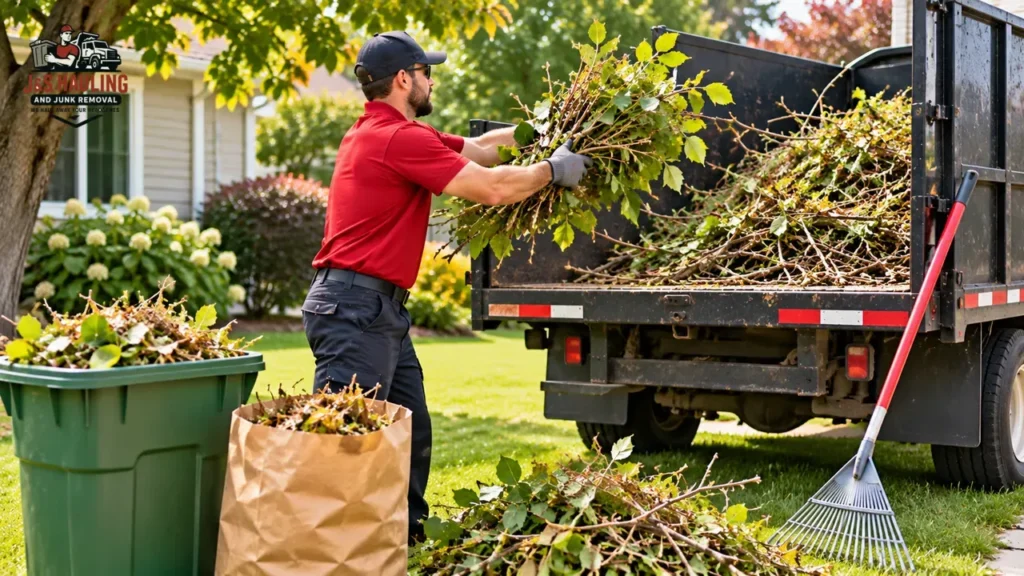
Green waste hauling is especially useful when you have more bags, branches, or brush than your regular collection program allows. A hauling crew can load the material directly from your property and transport it to an appropriate processing or disposal facility.
Consider arranging a professional pickup when:
- You have more branches than your regular collection program accepts.
- Storm debris covers a large part of the yard.
- You are clearing shrubs, an overgrown fence line, or a neglected property.
- You lack a suitable vehicle for transporting bulky material.
- The cleanup includes heavy lifting that you cannot safely manage.
- You need the area cleared before landscaping, selling a property, or completing outdoor repairs.
Professional yard waste removal can save time because the crew handles the loading and transportation, depending on the service selected. Before booking, confirm that the provider accepts your specific materials and uses an appropriate disposal or processing facility.
If you are comparing providers, ask for an estimate based on the pile’s size and condition. A few clear photos, the property’s access details, and a list of the materials will help the company assess the job.
| Tip: If the cleanup follows a storm, tell the provider whether the pile includes fallen limbs, whole tree sections, fencing, or other damaged property materials. These items may require different handling and pricing. |
Prepare the Yard Before Pickup
A little preparation can reduce loading time and help yard waste removal go smoothly. You do not need to bag or bundle everything before requesting service, but knowing what is included helps the provider plan.
Before the scheduled pickup:
- Collect loose leaves into the required bags or a clear pile.
- Stack branches away from parked vehicles and pedestrian paths.
- Separate brush from soil, rocks, lumber, and household trash.
- Move garden tools, hoses, and outdoor furniture away from the debris.
- Keep the access route clear for the crew and vehicle.
- Confirm the arrival window and any instructions about where the pile is located.
If material is wet, avoid stacking it where it can block a walkway or drain. Keep children and pets away from sharp branches and unstable piles until the work is complete.
These steps make yard waste removal more straightforward and help prevent delays caused by mixed materials or difficult access.
Frequently Asked Questions
How do I throw out twigs and branches?
Collect small twigs in an approved yard waste bag or container. Bundle larger branches if your local collection program requires it. For thick limbs, check whether a local drop off facility or hauling company accepts them before transporting the load.
Are leaves considered brush at a dump?
Not always. Many disposal facilities classify leaves separately from woody brush because leaves can be composted while branches may be chipped into mulch. Check the facility’s accepted materials before arriving.
How do I dispose of leaves after raking?
You can compost them, mulch them into your lawn, place them in approved paper bags for collection, or take them to a designated drop off site. Choose the option that fits your local rules and the amount collected.
Can I throw leaves in my garbage?
That depends on your local waste collection rules. Some communities prohibit yard debris in regular trash, while others allow limited amounts. Check with your waste provider before putting leaves in your household garbage.
How do I get rid of bags of leaves?
Use your city’s scheduled leaf collection, take the bags to an approved facility, or arrange yard waste removal if you have too many bags to transport. Confirm whether plastic bags are accepted because many composting programs require paper bags or approved containers.
How long does it take grass clippings to disintegrate?
Grass clippings left in a thin layer can begin breaking down within days and often decompose over one to three weeks in favorable conditions. Thick clumps, dry weather, and poor airflow can slow the process. Spread clippings evenly to help them break down.
Does the company offer yard debris pickup?
For information about available yard waste removal services, accepted materials, and scheduling, contact the company directly. Describe the amount of debris and whether the pile includes leaves, branches, or brush so the team can assess your needs.
How much does a professional yard cleanup cost?
The price depends on the size of the pilelarger cleanups can cost several hundred dollars or more. Request a quote for your specific job rather than relying on a general estimate.
Can I schedule pickup after a storm?
You can contact a local hauling provider to ask about availability after a storm. Explain whether the debris consists of small branches or large fallen limbs. Trees near power lines, unstable limbs, and other dangerous situations should be handled by qualified professionals before routine yard waste removal begins.
What should I do with yard debris that contains soil or rocks?
Keep soil and rocks separate from leaves and clean, loading requirements, access, and disposal costs. A small pickup may cost around $75 to $200, while branches. These materials are heavier and may not be accepted by facilities that process organic debris. Ask the receiving facility or hauling provider about the correct disposal method before mixing the materials.
Conclusion
A clean yard starts with choosing the right method for each type of debris. Composting and mulching work well for leaves and grass, while curbside collection and local drop off sites can handle suitable quantities of branches and brush. Larger piles may require professional help, especially after storms or major landscaping work.
Planning yard waste removal before the pile becomes difficult to manage can save time, reduce extra trips, and help keep your property safe and tidy. Check local rules, separate unsuitable materials, and compare the total cost before choosing a disposal method.
Get Help With Your Yard Cleanup
When leaves, branches, and brush become too much to handle alone, J&S Hauling and Junk Removal can discuss your cleanup needs and available yard waste removal options. Share the approximate pile size and material types to help determine the right service for the job.
Call J&S Hauling and Junk Removal at (618) 310-6823 or email jasen@jshauling.com to ask about availability and request a quote.
Sources
- U.S. Environmental Protection Agency: National Overview of Waste and Recycling. Provides national waste generation and composting figures, along with guidance on preferred waste management practices.
- City of Champaign, Illinois: Yard Waste Information. Provides a municipal example of local yard debris collection guidance. Check your own city’s rules because collection requirements differ by location.