Summarize with
Water heater removal is more than just carting off a heavy water heater. It is to safely separate the unit, to not flood a basement floor with the liquid, and to ensure that the steel shell is actually recycled and not left in a landfill for decades. From that first cold, snowy night, the tank can sit in after a failure, or an owner’s decision to replace before the first cold snap; removing the old tank is just as important as installing the new tank. This guide explains what makes the recycling process different, how recycling really works, the removal sequence, and what to avoid doing to make it less of a headache.
Why Water Heater Removal Isn’t a One-Size-Fits-All Job
Just the biggest factor that shifts how a removal job is handled by fuel type, gas or dynamic. A gas unit has a flue ventilator, a gas shutoff valve, and, from time to time, a flexible connector that needs to be capped correctly before the tank can be moved; skip that step, and you’re left with an open gas line. An electric unit skips the venting concern entirely but still needs the breaker shut off and wiring detached before anybody contacts the tank. Industry guidance on appliance recycling constantly points out that the steel tank shell is almost entirely recyclable scrap metal, but only if it reaches a facility set up to process it rather than a standard landfill bin.
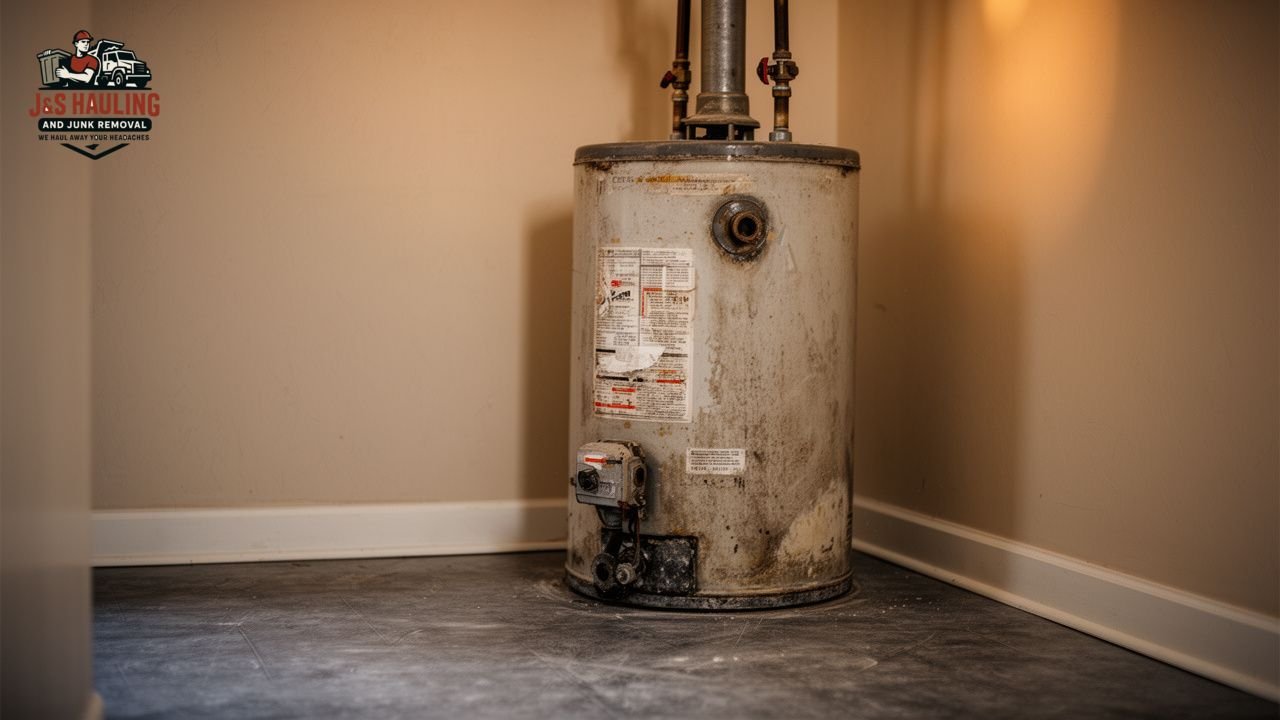
Gas water heaters carry the higher-risk profile of the two. The flue pipe has to come apart cleanly, the gas cock needs a quarter-turn to fully shut, and in older homes, the flexible gas connector is sometimes original to the house and brittle enough to crack if forced. A tank that’s been leaking for a few days often has rust pinholes near the base, so lifting it wrong can open a new leak mid-removal.
Electric water heaters are simpler to disconnect but not necessarily lighter — a 50-gallon glass-lined tank still weighs close to 150 pounds even fully drained, and the sediment that settles at the bottom over years of hard Midwest water adds real weight before anyone starts lifting. This is where most people start looking into how to recycle a water heater, rather than just setting it at the curb, since scrap yards and appliance recyclers will actually take the unit apart for the copper coil and steel jacket instead of letting it rust in a pile.
Removal Options Compared: What Actually Handles the Job Right
Homeowners usually select from four paths when an old tank needs to go, and each one manages disconnection, hauling, and recycling in a different way. A report from a general industry source on appliance disposal notes that curbside bulk pickup is the option that most often fails to recycle the unit at all, since municipal crews aren’t equipped to separate scrap metal from general waste.
| Removal Option | Handles Gas/Electric Disconnect | Same-Day Availability | Recycling Guaranteed | Heavy Lifting Required (You) |
|---|---|---|---|---|
| Professional junk removal pickup | Yes | Often | Yes | No |
| Retailer haul-away (with new unit purchase) | Sometimes | No, tied to the install date | Sometimes | No |
| Scrap metal recycler drop-off | No, you disconnect first | Depends on hours | Yes | Yes |
| Curbside bulk trash pickup | No | No, scheduled day only | Rarely | Yes |
A professional pickup crew shows up already prepared for the disconnection work, capping the gas line, draining the tank on-site, and loading it without dragging a rusted base across the flooring. Retailer haul-away only works if you’re buying a replacement unit through that same retailer, and it’s usually limited to a single old tank per delivery. A scrap yard will pay a small amount for the metal, but you’re responsible for draining, disconnecting, and transporting a heavy, possibly waterlogged tank yourself.
What Happens with your Old Water Heater After Pickup
Once a tank leaves the house, where it ends up matters more than most homeowners realize. A unit set out for standard trash collection typically gets crushed and buried along with everything else in the load, wasting steel and copper that could have gone back into circulation.
A responsible removal crew separates the tank out specifically because scrap processors want it the outer steel jacket, the internal glass-lined tank, and the copper heating elements or coil all get sorted and sold separately once the unit reaches a metal recycling facility.
Discard metal reusing organizations that trail the industry, such as the Institute of Scrap Recycling Industries, note that ferrous scrap, like water heater tanks, is one of the most continuously recycled material streams in North America, mostly because steel recovery is more affordable than mining and smelting new ore.
The U.S. Department of Energy’s consumer guidance on water heating equipment also points out that most residential units reach the end of their service life somewhere between 8 and 12 years, which is exactly when the recycling stream sees the highest volume of old tanks entering the system.
Water Heater Removal, Step by Step
- Shut off the power or gas supply, Flip the circuit breaker for an electric component or change the gas cockerel a quarter turn for a gas model before something else occurs.
- Close the cold water supply valve to the tank, so no more water enters during detachment.
- Attach a hose to the drain valve near the base and run it to a floor drain or exterior, then open the valve to empty the tank fully.
- Disconnect the water lines at the top of the unit, capping or securing them so nothing drips once the tank is disconnected from the plumbing.
- Detach the flue vent (gas units) or the wiring conduit (electric units) carefully, since older venting can be brittle and prone to cracking.
- Tilt and load the tank onto a hand truck or dolly rated for the load, securing the flooring and staircases along the way.
- Shipping the unit to a recycling facility or handing it off to the removal crew, validating it’s directed to a junk processor rather than a standard waste bin.
Points to Review Before Selecting a Removal Option
- Fuel type and disconnection complexity: Gas units require the flue and gas line to be handled perfectly; electric units want the installation and breaker to be addressed. Understand which one you’re transacting before scheduling anything.
- Even if you’re exchanging the unit at the same time: If a new water heater is passing in instantly, coordinating past unit removal with the install crew often reserves a second trip.
- How the old tank will actually be recycled: Ask directly whether the option you’re choosing guarantees the tank reaches a scrap or recycling facility instead of a landfill.
- Physical access and stairs: A tank in a basement or a tight utility closet may need a crew with the right equipment rather than a DIY curb-drag.
Frequently Asked Questions
Do you have a disposal for your water heater in Edwardsville, IL?
Water heater disposal service is available, and the old water heater will be recycled as a metal item, instead of being disposed of in the garbage.
Handle With Old Water Heater Picks Up in Belleville, IL?
Whether the water heater is gas or electric, and if it is still plugged in or disconnected, an old water heater pickup is available in Belleville, IL.
How about water heater removal in O’Fallon, IL?
Water heater removal service is available for the entire St. Louis metro area, and is scheduled in the same manner as any other stop along the way to O’Fallon, IL.
Does a water heater removal company near St. Louis have any service area restrictions?
The heart of the service area consists of Granite City, Edwardsville, Belleville, O’Fallon, and St. Louis itself; communities just outside the boundaries are often served as well.
May be able to remove the gas water heater or just the electric?
Gas or electric water heaters can be removed; with gas, just add a step to turn off and cap the fuel line before removing the tank.
Can a leaking or rusted-out water heater still be picked up?
Yes, a leaky or heavily rusted tank can still be removed; it’s really one of the more common causes people call for removal at the first site.
Do you remove tankless water heaters, too?
Tankless units can be removed as well, though the disconnection involves different fittings than a standard tank-style water heater.
Do I need to disconnect the gas or water lines myself?
No, an extraction crew handles the full disconnection sequence, including the gas line, water supply, and any wiring, so nothing needs to be prepped in advance.
Homeowner Tips From Industry Professionals
The most important decision is not which company shows up; it’s whether the old tank actually gets disconnected safely and recycled instead of being buried. Gas units are the most dangerous around the flue and fuel line, electric units are dangerous around the wiring and weight, and all tanks should be properly drained before anyone lifts one. With a little planning around fuel type, stairs, and recycling routing, what could be a stressful, water-soaked afternoon becomes a simple job.
Expert Support for Your Water Heater Removal Project
J&S Hauling and Junk Removal manages water heater removal overall in Granite City and the surrounding St. Louis metro area, from securely draining and separating gas or electric elements to hauling the old tank to a proper reclamation facility. Whether the job is a single leaking tank in a basement or part of a larger property cleanout, the same careful, code-aware process applies every time. Contact J&S Hauling and Junk Removal at (618) 310-6823 or email jasen@jshauling.com to plan a pickup that gets handled right the first time.
Sources