Summarize with
It is a lot more complicated than you might imagine to get rid of an old oven or stove. You cannot just drag it out to the curb like a busted chair. These appliances are heavy and typically include elements that are serious environmental dangers when they are not handled properly.
We have worked with hundreds of homeowners at J&S Hauling and we understand why people look for quality appliance removal services that they can actually trust with their homes.
The EPA’s official appliance disposal page has solid information about regulations and safe handling. We follow all those guidelines ourselves. Your old oven deserves to be handled correctly. Your home deserves protection during the removal. And the environment deserves better than having your appliance dumped illegally.
When an Old Oven or Stove Needs Removal
Your oven breaks down and the repair bill makes you wince. You are finally doing that kitchen remodel you have been planning for years. You are moving to a smaller place and your old gas stove would not fit. You have an outdated oven or stove that has to get out of the way whatever brought you here we handle it all.
Sometimes the unit still works fine but it is old or inefficient. Sometimes it’s completely dead and dangerous to keep around. Having it sit in your kitchen is not a real solution. Old appliances from the 1990s and early 2000s often contain materials that can harm the environment if they end up in a regular landfill.
Getting appliance removal services sooner rather than later makes a real difference. You get your kitchen space back immediately. Your home feels less cluttered. And you know for certain that your old stove is being handled responsibly instead of worrying about it for months.
What Oven and Stove Removal Services Cover
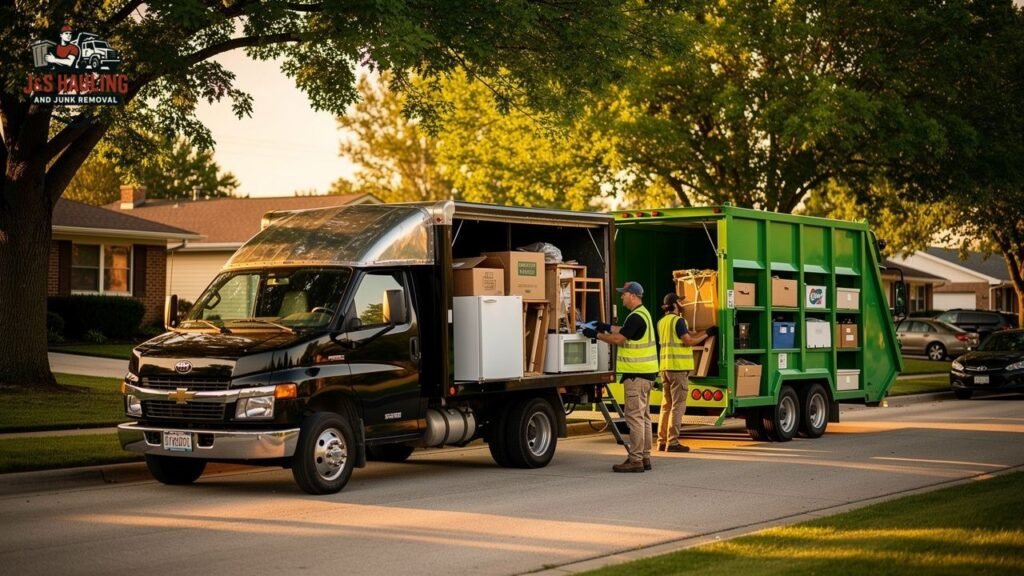
Oven and stove removal services go way beyond just throwing your old appliance in a truck. Good services cover the entire journey from your kitchen to its final destination. This means someone shows up, figures out how to disconnect it safely, moves it without destroying your walls and floors, loads it properly, and makes sure it goes somewhere responsible.
Disconnecting is the first real challenge. Gas stoves need the gas supply shut off at the valve. Electric units need power cut at the breaker. Getting this wrong can cause gas leaks or electrical hazards. That’s why appliance removal services never skip this step.
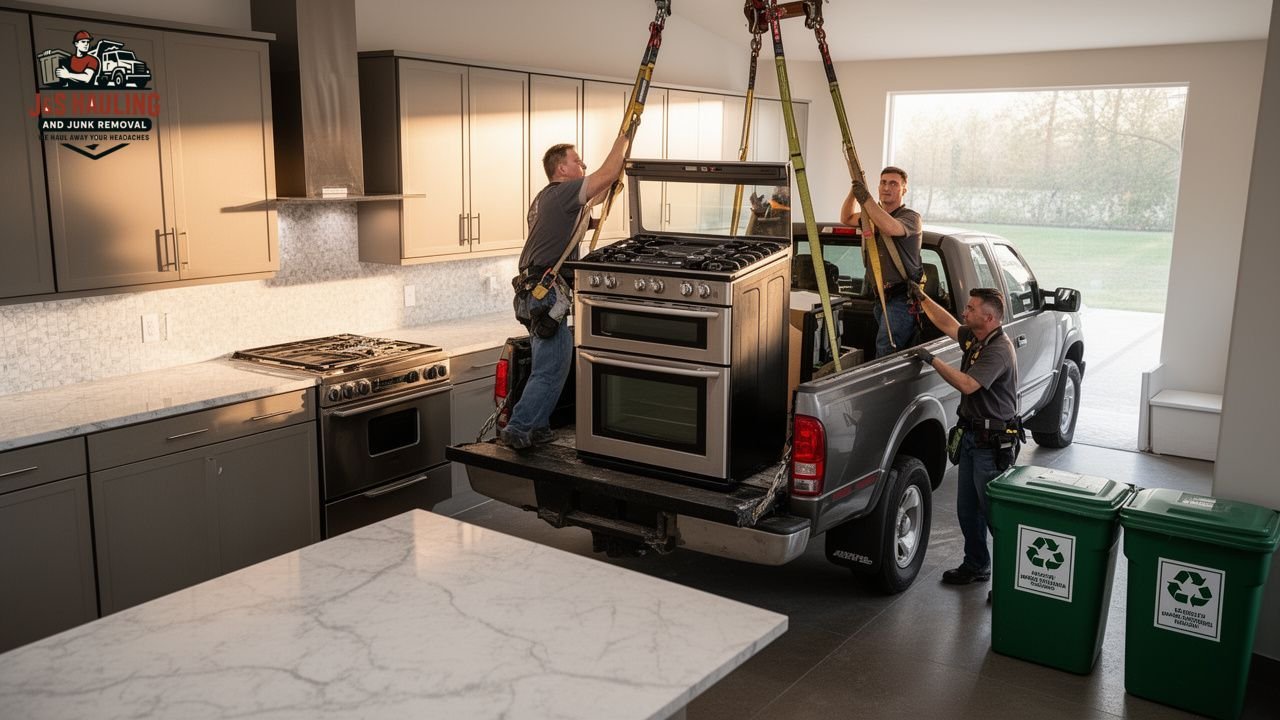
Next comes the actual moving. Your oven probably weighs between 200 and 400 pounds. That’s not something most people can move alone without injury. A professional crew brings equipment like dollies and sliders to protect both your kitchen and their backs.
Finally, the disposal matters more than most people realize. Oven and stove removal services do not just dump your appliance somewhere. They coordinate with recycling facilities and donation centers or proper disposal sites. Some places will refurbish your unit if it still works. Others will recycle the metals. The team knows which option fits your situation and handles all the logistics.
How Oven and Stove Removal Works
Here is the real breakdown of how oven and stove removal works from start to finish.
Scheduling the Pickup
First, you call. You tell us about your oven or stove. We ask a few basic questions. What size is it? Does it work? Is it electric or gas? What floor is your kitchen on? Where’s the nearest exit? Based on your answers, we give you a realistic timeframe.
Most of our appointments get scheduled within a few days. We’re not talking weeks of waiting around. We show up, we handle it, we’re done. The whole thing usually takes just one to two hours.
Preparing the Access Path
Before we arrive, you can make our job easier. Clear the pathway from your kitchen to the door or driveway. Move coffee tables and area rugs or anything else that could slow us down or get damaged. If your oven is upstairs, then make sure hallways are open.
Moving the Appliance
When the crew shows up, we bring the right tools. We have carts or furniture sliders and heavy protective sheets. Also, we locate the shutoff valve and disconnect the gas line and for an electric stove, we flip the breaker to cut power, then unplug it. These steps are not optional. They follow OSHA safety guidelines because disconnecting improperly can cause serious injury.
Now comes the actual move. We slide, tilt, and carefully maneuver your oven out of the kitchen. It takes teamwork and experience to do this without scraping walls or dropping the unit on someone’s foot. That’s why this job is dangerous for DIY attempts and perfect for professionals.
Sorting the Appliance After Pickup
Once your oven reaches our certified recycling partner, something interesting happens. Workers separate the metals from everything else. Steel components go to steel recyclers. Aluminum frames go to aluminum recycling.
Any hazardous stuff inside gets removed according to environmental regulations. This sorting is essential because ovens contain multiple materials that need different processing paths.
How to Prepare an Oven for Removal
How to prepare an oven for removal really comes down to a handful of simple tasks. You do not need to do much, but doing these things makes everything smoother.
Empty your oven first. Get any food debris out. Remove the racks if you want to keep them. If you’ve got a self-cleaning oven, don’t run the cycle right before we arrive. Let it cool all the way down because those units get extremely hot and take forever to cool off.
Clear the pathway to your kitchen. Move furniture out of the way. Roll up any rugs. If we have to squeeze past a coffee table or step over a baby gate, removal takes longer and the risk of damage goes up. You want a clear, straight route.
Tell us where your gas stoppage valve is located or where the breaker box is so we can turn off the power to the electric stove. These details help us disconnect everything safely without any guessing or wasted time looking around your home.
If you removed the oven racks and stored them somewhere else, just mention that to us when we arrive. We need to know whether the racks are part of the removal or if you’re keeping them. Getting appliance removal services goes faster when we have all the information upfront.
Can Ovens and Stoves Be Recycled
Many homeowners wonder whether ovens and stoves can be recycled, and the answer depends on the appliance or material type and the recycling options available in their area. It is not quite as simple as yes or no.
Your oven is mostly steel and aluminum. Both of those materials are incredibly valuable and recyclers want them. Steel mills buy recovered steel constantly. Aluminum processors do the same thing. Glass from your oven’s door can also be reused. So theoretically, your appliance is 80% recyclable material.
The problem is that only about 20% of large appliances are being recycled properly globally. Why? Partly because people don’t know they can be recycled. Partly because sending an appliance to the wrong place means it gets dumped instead. When that happens, metals end up in landfills where they’re wasted.
The difference between good recycling and bad recycling comes down to certification. A fly by night scrapper might strip out the valuable metals and throw the rest in the trash. That is not real recycling.
A certified facility complies with EPA regulations and recycles as much as possible from your oven. The housing, the door, the internal components – it all gets processed properly. That’s what responsible recycling actually looks like.
Where to Recycle Old Appliances
Where to recycle old appliances depends on what’s available in your area and your oven’s current condition. Most communities have at least one facility that accepts ovens and stoves. Not all of them do, though. Some places only take refrigerators or washing machines. That’s why calling ahead matters.
You want to know that your oven will actually be accepted before we load it in the truck. Getting where to recycle old electronics figured out before scheduling removal means we can take it straight to the right place without wasting time or backtracking.
How to Dispose of an Old Oven and Stove
How to dispose of an old oven and stove really depends on the condition of your unit and how much effort you want to put in.
Recycling an Old Appliance
If your oven is dead and beyond repair, recycling is the way to go. A certified facility takes it apart properly. They pull out anything hazardous. They separate the metals from other materials. Steel goes to steel recyclers. Aluminum goes to aluminum recyclers. Glass goes to glass processors. About 80% of your oven’s weight actually gets recovered and reused instead of landfilled.
Donating a Working Appliance
Your oven still works? That changes everything. Don’t send it to a recycler. Donate it instead. Habitat for Humanity ReStore takes working appliances and sells them cheaply to families who need them.
Other charities like churches and community organizations do the same thing. Your working oven gets a second life. Some family benefits from owning an affordable appliance. Everybody wins.
Using Bulk-Item Collection
Some cities and towns run bulk pickup programs. You call them up and they come get your oven. Usually these programs are free or cheap. The downside is that they’re often backed up. You might wait two weeks or three weeks for pickup. If you’re in no rush, this option works fine. Just plan ahead and don’t expect fast service.
Arranging Professional Pickup
If you want everything handled efficiently and responsibly, hire a professional appliance removal services company. A quality appliance removal services provider shows up when they say they will. We figure out whether your oven can be donated or needs recycling.
We take it to the right facility. You don’t have to figure anything out. You just get your kitchen space back and know that your oven was handled properly.
Appliance Disposal Services for Appliances That Cannot Be Reused
Sometimes your oven is just done. It’s broken beyond repair. Trying to fix it costs more than buying new. Nobody wants to donate it because it doesn’t work. In these situations you need appliance disposal services that know what to do with dead appliances.
We assess your oven when we pick it up. We figure out if anything is salvageable or if the whole thing needs to go to a certified disposal facility. Either way, it gets handled correctly. Nothing gets dumped illegally. No metals end up in a regular landfill.
We extract whatever can be recovered and send the rest to proper processing. This keeps your broken oven out of the waste stream and recovers valuable materials that would otherwise be lost forever.
How Much Does Appliance Removal Cost
How much does appliance removal cost is depends on several things. Such as:
- Location matters.
- How big is your oven?
- Is it electric or gas?
- How easy is it to access your kitchen?
For a clearer breakdown of pricing factors, this appliance removal cost guide can help you understand what may affect the final cost. Most appliance removal services in the Midwest and Eastern regions run between $75 and $200 per appliance. That’s for a standard-sized oven in normal circumstances. Bigger units cost more. Complicated situations cost more too.
Here’s what I mean by complicated. If your oven is in a basement kitchen with narrow doorways, removal takes longer and requires more care. A dual oven setup takes more time than a single unit. A gas stove that needs professional gas line disconnection might add $150 to $300 to your bill because a licensed plumber has to cap the line afterward.
What Can Change the Removal Cost
Think of your bill like this. Your oven’s size affects labor time. Multiple appliances get a volume discount. Easy access means faster work. Difficult access means slower work. Proximity to recycling facilities affects transportation cost.
Some companies roll everything into one price. Others charge separately for disposal. Always ask upfront what your quote includes so you know exactly what you’re paying.
| Cost Factor | What Changes |
|---|---|
| Oven size | Labor time required |
| Number of appliances | Overall job complexity |
| Kitchen access | Time needed for removal |
| Distance to facility | Transportation costs |
| Disposal method | Final processing fees |
Professional Appliance Removal vs DIY Disposal
Here’s the honest comparison. Professional appliance removal vs DIY disposal comes down to time, money, safety, and convenience.
| Factor | Professional Removal | DIY Disposal |
|---|---|---|
| Lifting work | Our team handles it | You handle it |
| Truck and equipment | We provide everything | You rent or arrange it |
| Your time | Minimal | Many hours required |
| Disconnection work | We do it safely | You figure it out |
| Final disposal | We arrange it | You arrange it |
When DIY Disposal Fits
You might think about doing this yourself if you own a truck or have friends willing to help move a heavy appliance and know how to safely disconnect gas or electrical lines. You could save on labor costs. That sounds good until you add things up.
Renting a truck costs fifty to seventy five dollars. Muscle your oven around without equipment and you risk injury. Getting the gas disconnection wrong causes gas leaks or explosions. Messing up electrical disconnection causes electrical shocks.
Drop a three hundred pound oven on your foot and your day is ruined. The money you save on labor disappears when you factor in truck rental, your time, your friends’ time, and the risk of damage to your home.
When Professional Removal Fits
Professional removal makes sense for most people. Your time is valuable. Heavy equipment does the work safely. We know your local recycling options and handle everything. Your home stays protected. You don’t risk injury or property damage. Your appliance gets disposed of responsibly. The peace of mind alone is worth the cost.
What to Check Before Arranging Appliance Removal
Before you call for appliance removal services, take five minutes and figure out a few basic things. Is your oven electric or gas? Where’s the power outlet or gas line? Can the oven actually fit through your kitchen doorway and down the hallway? If you live in an apartment, are there any building rules about large item removal or elevator use?
These details help us give you an accurate quote and schedule an appointment that actually works. When we know what we’re dealing with beforehand, appliance removal services go more smoothly and we can give you better pricing. Everyone benefits when we have complete information upfront.
Choosing the Right Option for Your Old Oven or Stove
Here’s how to decide. Does your oven still work? Donate it. Does it need to go to the recycling facility? Find one that accepts ovens. Is it too heavy or complicated to move? Call professionals for appliance removal services like J&S Hauling. Is your kitchen impossible to access? Definitely call professionals. The right choice depends on your specific situation.
Giving an Old Oven or Stove the Right Next Step
Choosing responsible appliance removal services makes an actual difference. You are keeping hazardous stuff out of landfills. You are recovering valuable materials for reuse. You are supporting your community through donation when possible. It is not cool work but it matters.
We at J&S Hauling and Junk Removal have been doing this for years. We know how to disconnect your oven safely. We know which recycling facilities accept ovens. We know how to move heavy appliances without destroying homes. We work with certified recycling partners and we donate working units whenever possible instead of sending everything to the landfill.
Ready to get your old oven out? Call us at (618) 310-6823 or email jasen@jshauling.com. We will give you a free estimate with no obligation. We will work around your schedule. And we will make sure your old oven gets handled the right way instead of becoming another environmental problem. This is what professional appliance removal services actually mean.
FAQs
1. Can I donate an oven if it doesn’t work perfectly?
Actually yes. Some charities specialize in fixing broken appliances and reselling them cheaply. Others use damaged units for employee training programs. Be honest about what’s wrong with your oven when you call. Habitat for Humanity and similar organizations will tell you straight up whether they can take it.
2. What really happens to my oven after you pick it up?
It goes to a certified recycling facility. Workers separate the metal parts from the glass and plastic. Steel gets processed into new steel products. Aluminum goes to aluminum recyclers. About 80% of your oven’s weight gets recovered and reused instead of dumped in a landfill.
3. Can I make money by selling my old oven for scrap?
Some scrapyards will buy old ovens based on what metal is worth that day. You might get twenty or thirty bucks. It’s rarely enough to cover transportation. Most people find that paying for professional removal and proper recycling is easier and less hassle than scrapping it themselves.
4. How much time should I plan for a removal appointment?
Usually one to two hours. If you have a tiny kitchen with awkward doorways or you’re removing multiple appliances, it might take longer. Most jobs fit into a standard appointment window.
5. What safety stuff should I know before you arrive?
Make sure your gas stove is off at the shutoff valve. Switch off power to electric ovens at the breaker. Clear the path from your kitchen to the door. Tell us if there’s anything fragile or expensive nearby. Do these things and we can work safely without surprises.
Sources
- U.S. Environmental Protection Agency. The EPA tracks appliance waste statistics and recycling rates through its official waste and recycling database. This gives us hard numbers on how much appliance waste America produces each year and how much actually gets recycled versus landfilled.
- E-Waste and Hazardous Substances in U.S. EPA data reveal that about 70% of all the heavy metals found in American landfills come from discarded electronics and appliances. This single fact shows why responsible recycling and disposal matter so much.