Most professional junk removal companies prioritize recycling and donating items to minimize the volume of waste sent to landfills. While disposal methods vary based on location and specific company policy, standard industry practice involves sorting through collected loads to separate scrap metal, electronics, appliances, and furniture that remains in good condition. Reputable services act as a bridge between residential properties and specialized processing facilities, ensuring that materials such as steel, aluminum, and certain plastics are returned to the manufacturing stream rather than occupying space in a dump.
This guide explains typical recycling workflows in the junk removal industry, the types of materials that qualify for diversion, and how to identify a service provider that follows environmentally responsible practices. Professionals in the hauling industry possess extensive knowledge regarding local waste regulations and the specific requirements of regional recycling centers. This expertise ensures that items are handled according to legal standards and environmental best practices.
How Junk Removal Recycling Processes Work
When a hauling team picks up a load of mixed debris, the items rarely go straight to a landfill. Instead, the process usually involves several strategic stops or a central sorting location.
Sorting at Transfer Stations
Many companies transport collected loads to a transfer station. These facilities serve as hubs where workers or machines sort through piles of junk to recover cardboard, wood, and metal. A report by the Environmental Protection Agency indicates that recycling and composting activities in the United States prevent a significant portion of waste from entering landfills, with the national recycling rate hovering around 32 percent. Junk removal services contribute to this figure by ensuring bulky items reach these specialized stations.
Direct Delivery to Specialized Facilities
For specific types of junk, such as old appliances or large quantities of scrap metal, a company might drive directly to a specialized recycler. Refrigerators, for example, require careful handling to remove refrigerants safely. Delivering these directly to a dedicated facility ensures the chemicals do not leak into the environment.
Partnerships with Charitable Organizations
Recycling is not the only way to divert waste. Many items that appear as “junk” to one person are still functional. Professional haulers often maintain relationships with local charities and thrift stores. If furniture, clothing, or household goods are in usable condition, the company drops them off at a donation center. This extends the lifecycle of the product and benefits the local community.
Market Data on Waste and Recycling
The volume of waste managed by junk removal companies is substantial. According to data provided by The Recycling Partnership, a large percentage of household recyclables are still lost to landfills due to lack of access or improper sorting at the source. Junk removal services help bridge this gap by providing the labor and transportation necessary to move large volumes of material to the correct processing locations.
| Item Category | Disposal Route | Recycling Potential |
| Household Appliances | Scrap metal facility | High |
| Upholstered Furniture | Donation or landfill | Low to Medium |
| Computer Electronics | E-waste processor | High |
| Construction Debris | Aggregate recycler | Medium |
| Cardboard and Paper | Paper mill / pulping | High |
| Mattresses | Specialized recycler | Low |
Things to Consider Before Making a Decision
Before hiring a company based on their recycling claims, consider these factors to ensure the service aligns with environmental goals:
- Transparency of Disposal Methods: Ask the company specifically where they take the junk. A reputable provider should be able to name local transfer stations, recycling centers, or charities they frequent.
- Item Condition Requirements: Understand that recycling centers have strict rules. If an item is heavily contaminated, wet, or infested with pests, it likely cannot be recycled or donated regardless of the company’s intentions.
- Local Infrastructure Limitations: In some rural areas, recycling facilities for certain materials might not exist. The ability to recycle often depends on the available regional facilities.
- Specialized Handling Fees: Some items, like televisions or tires, often require an extra fee for recycling because the processing centers charge the hauling company a premium to accept them.
Bonus Tip: Grouping similar items together before the hauling team arrives can speed up the sorting process. If all scrap metal is in one corner and old clothing is in another, the team can more easily direct those items to the appropriate recycling or donation trucks.
Common Questions About Junk Removal Recycling
Many people wonder if they should bother sorting their own trash before the haulers arrive. While professionals will handle the heavy lifting, knowing what can be processed helps set realistic expectations.
Do haulers recycle construction debris?
Yes, many haulers take construction and demolition waste to specialized plants. These facilities crush concrete into aggregate for new roads and grind wood into mulch or biomass fuel.
What happens to old tires and mattresses?
These are two of the most difficult items to process. Mattresses require manual deconstruction to separate the foam, fabric, and steel springs. Tires are often shredded for use in rubberized asphalt or fuel. Because these processes are labor intensive, they are not always recycled in every city.
Can electronics be thrown in the general truck?
Most states have strict laws against putting electronics in landfills. Junk removal companies usually set these aside for e-waste recyclers who can safely extract gold, copper, and rare earth metals while disposing of lead and mercury properly.
[Image: A junk removal truck parked outside a local community donation center]
Bonus Tip: If an item is still in great shape, consider calling a local charity first. Some charities offer free pickups for high-value items, which can save money on junk removal costs while ensuring the item finds a new home immediately.
Specialized Recycling Procedures for Difficult Items
Beyond general sorting, certain materials require technical recovery methods. Scrap metal recycling, for example, is a cornerstone of the junk removal business model. According to the environmental benefits of metal recycling, using recycled steel instead of virgin ore significantly reduces energy consumption and CO2 emissions. Junk removal companies profit from selling clean scrap metal, which provides a strong financial incentive to keep it out of landfills.
J&S Hauling and Junk Removal notes that customers frequently inquire about the fate of large appliances like washers and dryers. These units are nearly 100 percent recyclable because they consist primarily of steel and copper wiring. When a company picks up these units, they are rarely dumped; instead, they are processed specifically for their raw material value.
Important Factors in the Recycling Chain
The success of recycling in the hauling industry depends on several external factors. If a local recycling market collapses—as occasionally happens with certain types of plastic or glass—companies may be forced to landfill those items temporarily.
- Market Demand for Materials: If there is no buyer for recycled paper or plastic, processing centers may stop accepting them.
- State and Local Regulations: Some jurisdictions mandate the recycling of specific items, such as yard waste or appliances, which forces all local haulers to comply.
- Contamination Levels: If a load of cardboard is mixed with food waste, the entire load might be rejected by the recycling center.
Choosing a Responsible Service Provider
A company committed to recycling will typically highlight these efforts in their service descriptions. However, the most reliable way to verify their commitment is to ask about their diversion rate—the percentage of total weight they divert from the landfill. While 100 percent diversion is nearly impossible for general junk, high-performing companies often reach 60 percent or higher by combining recycling and donation efforts. J&S Hauling and Junk Removal maintains a focus on these diversion tactics to serve the community effectively.
Frequently Asked Questions
Does every junk removal company recycle?
Not every company prioritizes it. While many do, some smaller or “budget” operations might take everything to the local dump to save on labor costs associated with sorting. It is always best to verify their process during the initial quote.
Is recycling included in the standard price?
Generally, yes. The labor to sort and transport items is built into the volume-based pricing. However, items that require government-mandated recycling fees, such as refrigerators or tires, may carry a small additional surcharge.
Can junk removal companies recycle hazardous waste?
Most standard junk removal services are not licensed to carry hazardous materials like liquid paint, motor oil, or chemicals. These items require specialized transport and disposal. Homeowners should contact their local municipality for hazardous waste drop-off days.
What happens to furniture that is too damaged to donate?
If furniture is broken, stained, or has a structural failure, it cannot be donated. In these cases, the company will check if the materials can be recovered. For example, a wooden table might be recycled as scrap wood, but a particle-board desk will likely end up in a landfill because it contains glues and resins that are difficult to process.
Why is my junk being put into one large truck?
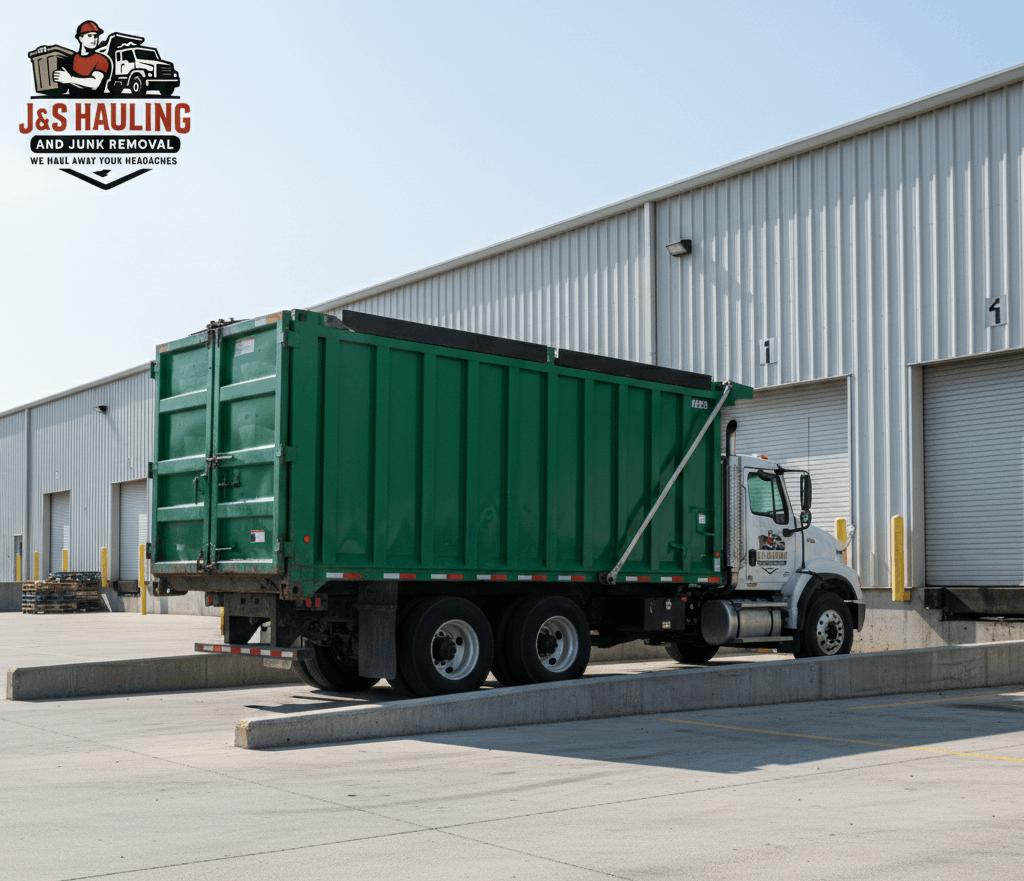
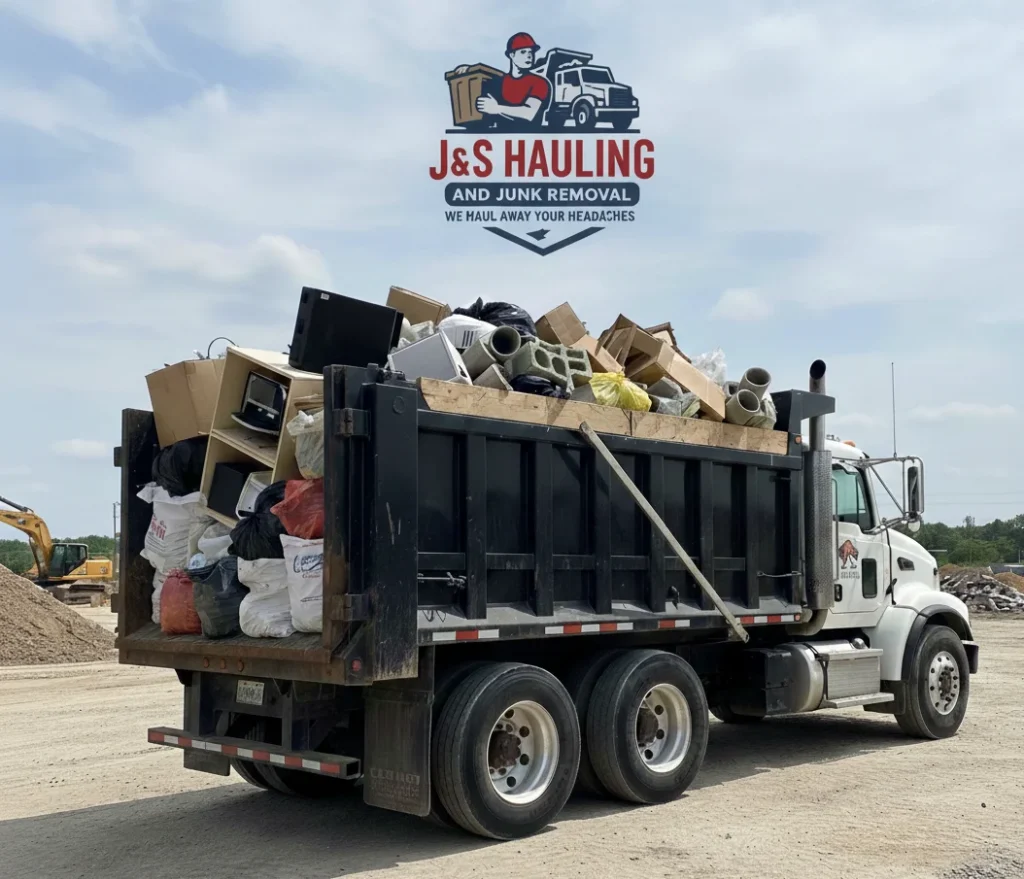
Even if the company recycles, they might put everything into one truck first. This does not mean it is all going to the dump. Many companies bring the truck back to a warehouse or a transfer station where the sorting happens in a controlled environment.
Summary of Recycling in Junk Removal
Professional junk removal serves a dual purpose by clearing space for customers and acting as a filter for the waste stream. By sorting materials and utilizing partnerships with recycling centers and charities, these companies prevent tons of usable material from wasting away in landfills. Customers should evaluate companies based on their transparency regarding disposal sites and their willingness to discuss how they handle specific materials like metal and electronics. J&S Hauling and Junk Removal emphasizes that responsible disposal is a standard part of modern hauling operations. Always verify the local reputation and recycling commitment of a provider before scheduling a pickup to ensure the most environmentally friendly outcome.
Evaluation of Specific Needs
To complement the general processes summarized above, it is important to remember that every junk removal project is unique. A basement cleanout filled with old books and clothes requires a different disposal strategy than a construction site filled with concrete and drywall. Evaluate the items being discarded and ask potential haulers how they intend to handle those specific categories. This direct approach ensures that expectations for recycling and donation are met for your particular project.
Contact Information and Service Details
If the task of sorting and hauling items feels overwhelming, professional assistance is available to manage the logistics of responsible disposal. J&S Hauling and Junk Removal provides efficient debris management and hauling services focused on the needs of the local community. For questions about specific items or to schedule a pickup, contact the team at (618) 310-6823 or reach out via email at jshauling@proton.me to discuss the best options for your project.
Sources
- Environmental Protection Agency – National overview of waste, recycling, and composting facts and figures in the United States.
- The Recycling Partnership – A report detailing the current state of residential recycling and the gaps in the system.
- environmental benefits of metal recycling – Evidence-based insights showing how recycling metals reduces energy use, lowers greenhouse gas emissions, and conserves natural resources.
- Statista – Historical data on the municipal solid waste recycling rate in the United States.